
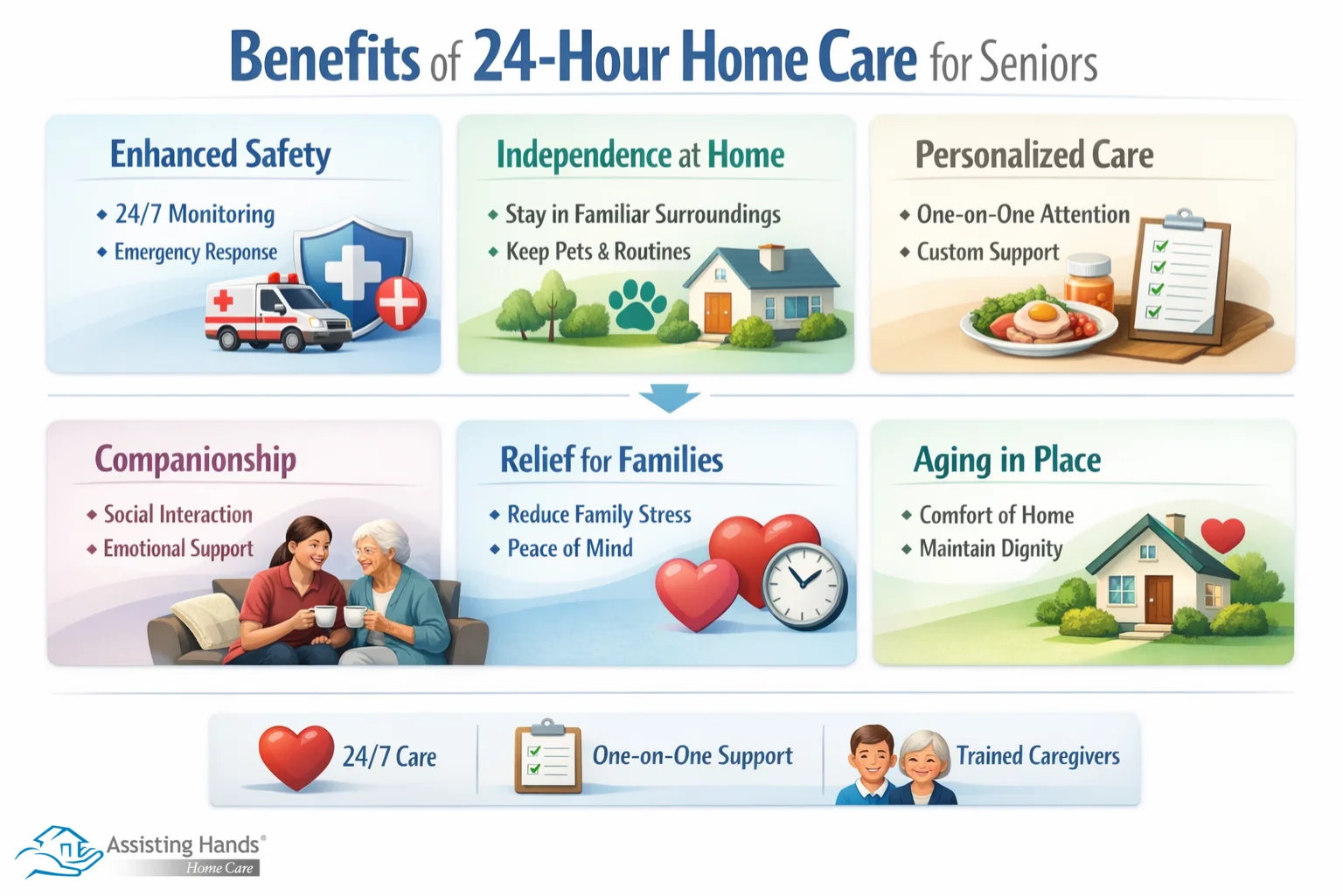
Twenty-four-hour in-home care benefits seniors by providing continuous supervision, immediate emergency response, personalized one-on-one support, and consistent companionship. This level of care allows older adults to remain safely in their own homes while maintaining independence, emotional wellbeing, and stability, especially when medical needs, mobility challenges, or cognitive decline require around-the-clock attention.
Making decisions about an aging loved one’s future is never easy, especially when safety becomes a concern. Twenty-four-hour in-home care provides a comprehensive solution that allows seniors to age in place while ensuring their needs are met at any time of day or night. Families who have explored the full benefits of home care for seniors often find that around-the-clock professional support is the most complete and compassionate option available. Here, we explore the primary advantages of choosing this level of care for aging loved ones.
How Does Continuous Supervision Enhance Safety?
Continuous supervision enhances safety by ensuring immediate assistance during accidents or medical emergencies. For seniors with mobility issues or cognitive decline, the risk of falls and accidents increases significantly, particularly during the night. A 24-hour caregiver monitors the environment proactively to remove hazards and assists with movement, ensuring a trip to the bathroom or the kitchen doesn’t end in injury.
Furthermore, in the event of a medical emergency, a professional is already present to act quickly and can administer CPR, call emergency services immediately, and provide critical information to paramedics upon arrival. This rapid response time can often make a crucial difference in health outcomes.
When researching agencies that provide Home Care Westminster for older adults in Westminster, families are usually looking for flexible care plans, compassionate and highly trained caregivers, and 24/7 availability. Whether you need respite care to take a break from your caregiving duties or your senior loved one needs around-the-clock assistance at home, you can rely on Assisting Hands Home Care.
Can Seniors Maintain Independence while Receiving Care?
Yes, seniors can remain independent because care is delivered without removing them from their home environments. Aging in place allows seniors to keep a sense of dignity and independence that’s often lost in institutional settings. Moving to an assisted living facility or nursing home can be traumatic, involving the loss of a familiar environment, cherished possessions, and established routines.
Twenty-four-hour in-home care brings the support system to seniors rather than uprooting them. This allows them to:
- Sleep in their own beds and wake up in familiar surroundings
- Keep their pets, which offers immense emotional support
- Maintain relationships with neighbors and their local communities
- Follow their own schedules rather than the rigid timetables of facilities
Some seniors only require help with a few daily tasks so they can maintain their independence. However, those living with serious illnesses may need more extensive assistance. Luckily, there is professional 24-hour and live-in care Westminster seniors can rely on. Home can be a safer and more comfortable place for your loved one to live with the help of an expertly trained and dedicated around-the-clock caregiver.
Is the Care Personalized to the Individual’s Needs?
Care is highly individualized because attention is focused on one senior rather than multiple residents. In larger facilities, staff members are often responsible for multiple residents simultaneously, which can lead to generalized care. In contrast, 24-hour in-home care is strictly one-on-one. The caregiver is focused entirely on a single individual, allowing for a highly personalized level of attention that adapts to changing needs.
This personalization extends to every aspect of daily life. Meals are prepared according to the senior’s specific dietary restrictions and taste preferences. Activities are tailored to the senior’s hobbies and energy levels. If a senior has a bad day or a sleepless night, the caregiver can adjust the routine immediately without disrupting others or breaking protocol.
How Does This Support Impact Family Members?
Around-the-clock care relieves families of constant supervision responsibilities and emotional strain. Caring for an aging relative is a demanding job that often leads to caregiver burnout. Family members frequently juggle their own careers, children, and personal health while trying to provide adequate support for their loved ones. This stress is compounded when the senior requires constant supervision.
Hiring 24-hour care relieves this burden, allowing family members to return to their roles as sons, daughters, or spouses rather than acting as full-time nurses. Knowing a trained professional is awake and alert with their loved one provides invaluable peace of mind. It eliminates the constant worry about whether Mom or Dad is safe alone at night, allowing the family to rest and recharge.
What Role Does Companionship Play in Senior Health?
Loneliness and social isolation are serious health risks for the elderly, often linked to depression and cognitive decline. A 24-hour caregiver provides consistent social interaction and meaningful companionship. Caregivers are there to listen to stories, play games, watch movies, or simply sit and chat over a cup of tea.
This emotional bond is particularly beneficial for seniors with conditions like Alzheimer’s or dementia. A familiar face provides stability and can reduce the anxiety and confusion often associated with memory loss. The caregiver becomes a trusted companion who understands the senior’s history and personality, providing emotional validation alongside physical support.
Frequently Asked Questions
What is 24-hour home care, and how does it work?
24-hour home care provides around-the-clock assistance, with caregivers working in shifts to ensure continuous support and supervision.
Who can benefit from 24-hour home care services?
It’s ideal for individuals with advanced medical needs, mobility challenges, or conditions like dementia that require constant monitoring.
What services are included in 24-hour home care?
Services can include personal care, medication organization, meal preparation, companionship, and overnight supervision for safety.
How is 24-hour home care different from live-in care?
In 24-hour care, caregivers work in shifts and don’t stay overnight, while live-in care involves a single caregiver who resides in the home and requires breaks.
Is 24-hour home care covered by insurance?
Coverage depends on the insurance plan and specific circumstances, so it’s important to review your policy or consult with the provider.
If your loved one is experiencing cognitive decline due to dementia, around-the-clock home care can be the ideal solution for your family. There are a variety of reasons for Westminster families to consider professional dementia care. Dementia caregivers are available 24/7 to help seniors maintain better cognitive health, and they can also assist with various tasks like medication reminders, transportation to medical appointments, and nutritious meal preparation. Trust your loved one’s care to the professionals at Assisting Hands Home Care. To create a customized home care plan for your loved one, call us today.