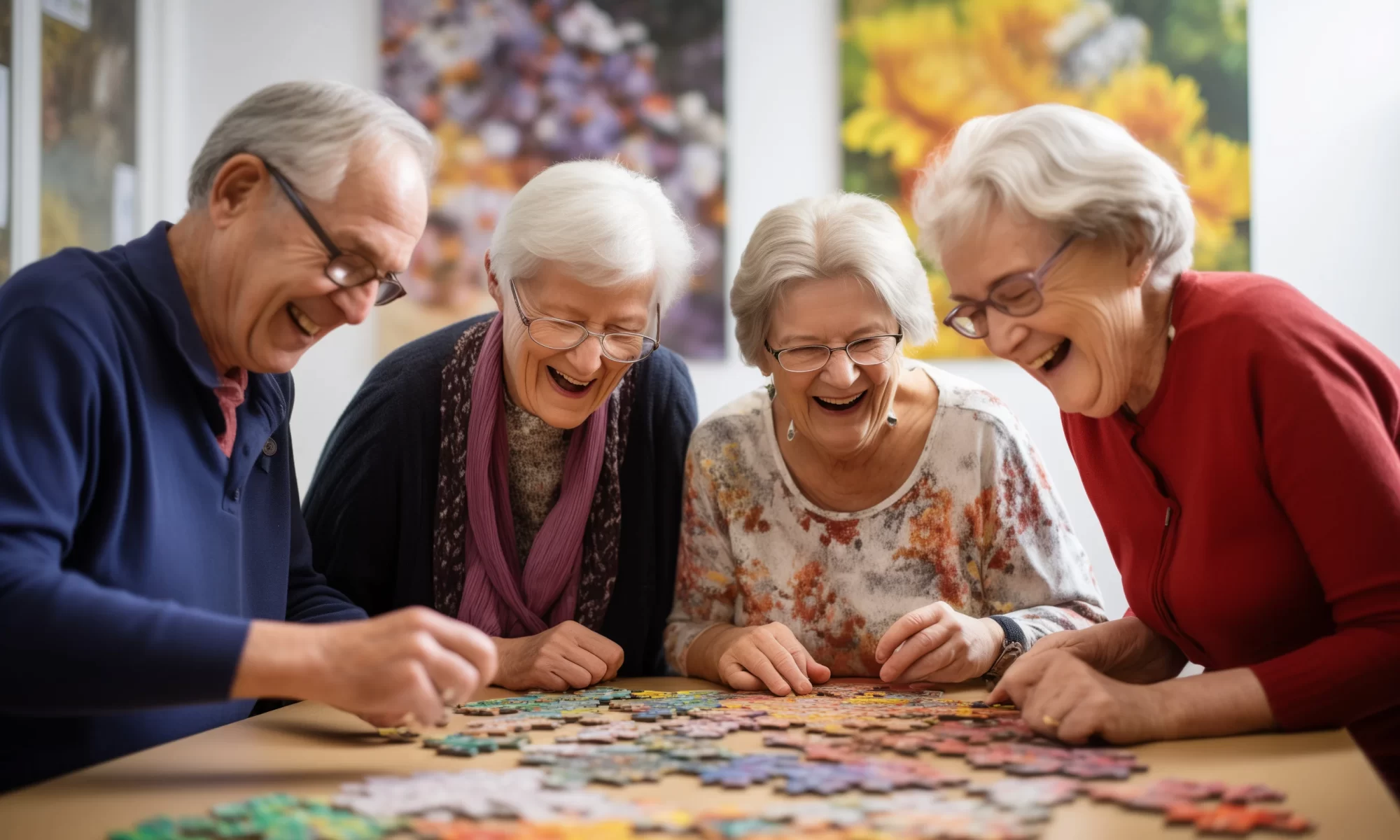
Finding meaningful ways to engage an older adult living with dementia can feel overwhelming as abilities, attention, and interests change. Gentle, familiar activities can reduce restlessness, support emotional balance, and create moments of connection. When activities are simple, flexible, and person-centered, they encourage participation without pressure and help seniors maintain dignity, comfort, and a sense of purpose throughout the day.
Alphabet Word Games for Cognitive Stimulation
Alphabet-based word games gently support cognitive stimulation activities without feeling like a test. Choosing familiar categories such as foods or places helps people with dementia stay engaged. These dementia activities encourage verbal expression, spark conversation, and can be adapted for different ability levels while remaining calm and supportive. Incorporating these games into Home Care Westminster activities helps seniors maintain engagement and cognitive function.
Simple Card Games to Encourage Interaction
Easy card games promote social connection and engagement activities for seniors with dementia. Matching or turn-based games enhance attention and communication while reducing isolation. These activities for older adults with dementia are most effective when played cooperatively, allowing caregivers to guide gently and maintain a relaxed mood.
Jigsaw Puzzles for Memory and Focus
Large-piece puzzles offer memory care activities that support focus and hand-eye coordination. Familiar images reduce frustration and help seniors maintain attention. These therapeutic activities for dementia provide a sense of achievement, making them ideal activities for seniors with dementia at home.
Word Scramble Activities to Spark Conversation
Word scrambles are engaging brain games for dementia that allow flexibility. Caregivers can offer hints or turn words into storytelling prompts. These activities for people with dementia support language skills and help seniors maintain engagement without pressure to perform correctly.
Sound and Rhythm Matching Games
Clapping patterns or rhythm matching supports sensory activities for dementia and auditory processing. These dementia engagement activities work well when verbal communication becomes difficult, offering meaningful participation through listening, movement, and imitation rather than spoken recall.
Scrapbooking with Familiar Themes
Scrapbooking supports creative activities for dementia by combining images, textures, and personal themes. Familiar photos encourage reminiscing and emotional connection. These activities for dementia patients help them maintain fine motor skills while promoting comfort and self-expression.
Painting with Watercolors or Fingers
Painting is a calming dementia activity that focuses on expression rather than outcomes. Watercolors and finger paints allow freedom and sensory engagement. These therapeutic activities for dementia reduce anxiety and provide enjoyment even when verbal skills decline.
Coloring Activities to Reduce Anxiety
Coloring familiar shapes supports calming activities for dementia and reduces agitation. Repetitive motion and color choice encourage focus and relaxation. These simple activities for dementia patients are especially useful during periods of restlessness or overstimulation.
Creating a Personal Photo Album
Photo albums provide meaningful activities for dementia by reinforcing identity and emotional memory. Discussing images encourages connection without correcting details. These dementia care activities support communication and help individuals feel seen and valued.
Drawing a Simple Family Tree Together
Drawing a family tree focuses on relationships rather than accuracy, making it supportive for dementia care. This activity encourages storytelling and emotional recall, strengthening bonds. It’s a gentle way to engage people with dementia while honoring their personal history.
Asking Open-Ended Reflective Questions
Open-ended questions promote engagement activities for dementia without right or wrong answers. They encourage imagination and emotional expression. These activities for seniors with dementia are an important part of dementia care, helping individuals maintain communication and reduce frustration caused by memory gaps.
Singing Familiar Songs Together
Singing supports music therapy for dementia and activates long-term memory pathways. Familiar melodies boost mood and connection. These activities for dementia patients often remain accessible even in the later stages of dementia, providing comfort and joy.
Listening to Music from Earlier in Life
Listening to favorite music offers calming dementia activities that support emotional regulation. Personalized playlists enhance memory care activities and reduce anxiety. Music-based engagement activities are especially effective during transitions or quiet time.
Chair Yoga for Gentle Movement
Chair yoga provides safe physical activities for dementia patients with limited mobility. Slow movements increase circulation and flexibility. These activities for people with dementia promote relaxation while reducing fall risk.
Balloon Batting for Coordination
Balloon batting supports physical activities for seniors with dementia by encouraging movement and laughter. The slow pace increases coordination without strain. This activity promotes engagement while keeping energy demands low.
Scarf Dancing for Balance and Enjoyment
Scarf dancing combines movement and music, supporting exercise for dementia patients. Flowing motions help with balance and coordination. These dementia engagement activities are playful and reduce resistance to physical movement.
Simple Step-Based Dance Movements
Basic dance steps offer enjoyable physical activities for dementia. Repetition and rhythm boost coordination and mood. Dancing together strengthens social bonds and keeps activities supportive rather than demanding.
Walking in a Safe Outdoor Area
Short walks encourage outdoor activities for dementia while supporting physical health. Observing surroundings promotes sensory engagement and conversation. These activities for older adults with dementia are best when supervised and routine-based.
Gardening and Plant Care Tasks
Gardening provides meaningful activities for dementia that encourage responsibility and routine. Simple tasks like watering plants support motor skills and emotional wellbeing. These activities connect individuals with nature and purpose.
Bird Watching or Feeding Outdoors
Bird watching encourages calm observation and sensory focus. For individuals receiving 24-hour care, this activity fits safely into structured routines while providing peaceful engagement and connection with nature.
Backyard or Indoor Picnicking
Picnicking adds novelty to daily routines and supports engagement activities for dementia. Changing the eating environment can enhance appetite and mood. These activities for seniors with dementia are simple yet refreshing.
Flower Arranging for Sensory Engagement
Flower arranging supports sensory activities for dementia through color, texture, and scent. It enhances fine motor skills and creativity. These activities for people with dementia encourage calm focus and enjoyment.
Folding Towels and Sorting Laundry
Folding laundry provides purposeful activities for dementia patients using familiar routines. Repetition and structure reduce anxiety. These activities for older adults with dementia support independence and confidence.
Setting the Table for Meals
Setting the table reinforces routine and responsibility. These activities for dementia patients provide clear steps and achievable goals, helping individuals feel useful and engaged before meals.
Cooking Simple Meals Together
Assisting with meal preparation offers meaningful activities for individuals with dementia. Tasks like stirring or washing produce stimulate senses and participation. These activities support routine and shared experiences, and they fit seamlessly into a dementia care at home environment where familiar kitchen settings can spark recognition and comfort.
Making Flavored Water with Fruits
Preparing flavored water promotes hydration and sensory engagement. Choosing ingredients supports decision-making. These simple activities for dementia patients add creativity to daily care routines.
Hand Massage with Scented Lotion
Hand massage provides calming activities for dementia that promote relaxation and trust. Familiar scents trigger emotional comfort. These therapeutic activities reduce anxiety and support connection.
Gentle Grooming Activities
Brushing hair or grooming supports dignity and self-care. These activities for people with dementia reinforce routine and trust while providing soothing sensory input.
Pet Interaction or Animal Observation
Animal interaction offers emotional support and reduces agitation. These activities for seniors with dementia encourage calm engagement without requiring verbal communication, making them widely accessible.
Playing with Soft Clay or Dough
Clay and dough activities support sensory activities for dementia and hand strength. The tactile experience promotes focus and creativity. These activities remain effective across stages.
Reading Aloud from Familiar Books
Reading aloud supports engagement activities for dementia without demanding reading skills. Familiar stories provide comfort and stimulate imagination. These activities for older adults with dementia encourage shared moments.
Watching Classic Movies or Shows
Classic films offer familiar entertainment and emotional connection. These dementia activities spark recognition and conversation, supporting relaxation and social engagement.
Looking Through Magazines or Picture Books
Browsing picture-heavy materials supports visual engagement activities for dementia. Discussing images encourages communication without relying on memory accuracy.
Organizing Objects by Color or Size
Sorting tasks provide structured cognitive stimulation activities. Clear goals reduce frustration. These activities for dementia patients support focus and calm.
Breathing and Relaxation Exercises
Guided breathing promotes calming activities for dementia. Slow breathing reduces anxiety and agitation. These simple practices can be done anywhere with minimal instruction.
Memory Box Exploration
Memory boxes offer meaningful dementia activities using familiar objects. Touch and discussion stimulate sensory and emotional memory, strengthening dementia care connections and fostering engagement.
Simple Household Chores with Purpose
Light chores provide routine and responsibility. These activities for seniors with dementia support self-worth and engagement through familiar tasks.
One-on-One Conversation Walks
One-on-one conversation walks combine gentle movement with emotional connection. Walking side by side often feels less demanding than face-to-face conversation, making it easier for people with dementia to share thoughts. These activities encourage communication, reduce restlessness, and help caregivers build trust without placing pressure on memory or verbal accuracy.
Sensory Fabric and Texture Exploration
Exploring different fabrics, such as cotton, wool, or silk, supports sensory activities for dementia. Touch-based engagement calms the nervous system and enhances focus. These activities for older adults with dementia are especially helpful when language skills decline and nonverbal interaction becomes more meaningful.
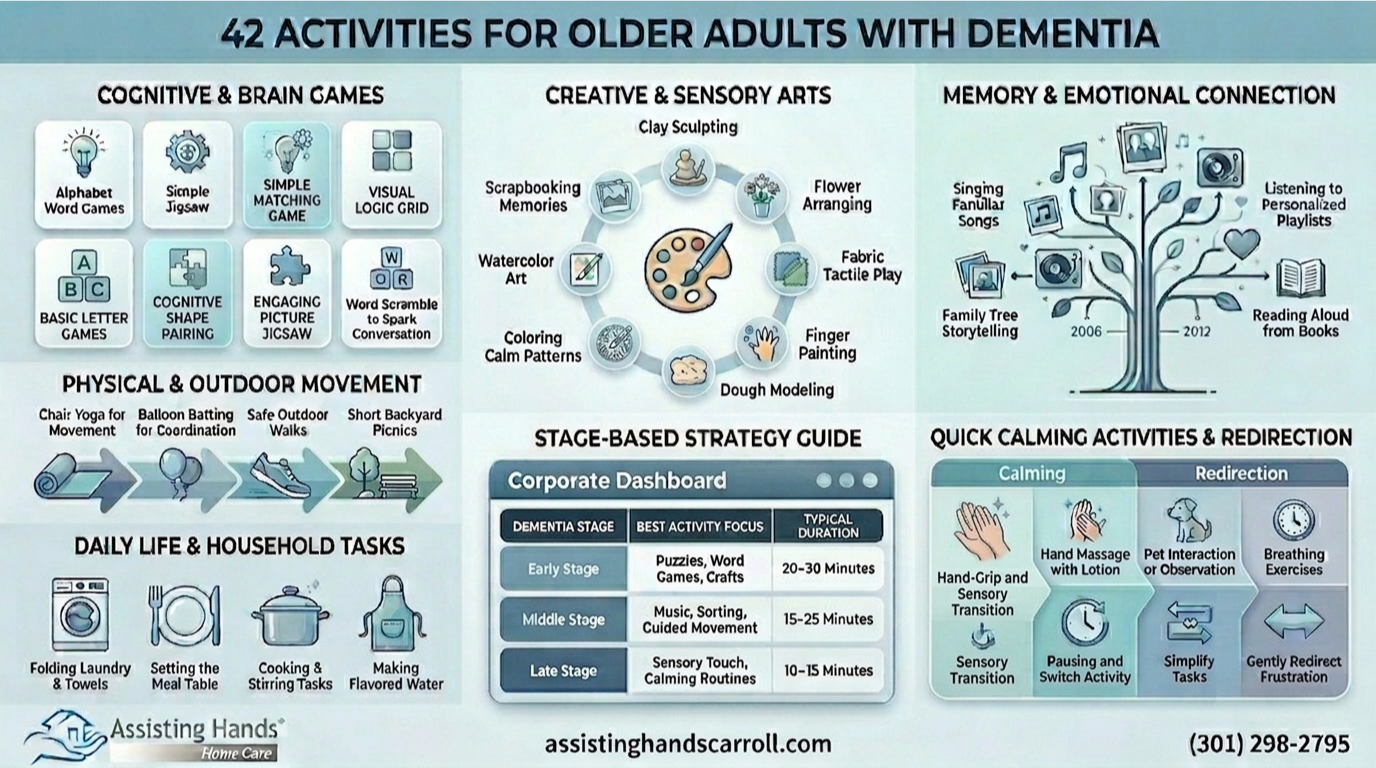
Stage-Based Activity Matching for Dementia Progression
| Dementia Stage | Best Activity Focus | Typical Duration |
| Early Stage | Puzzles, word games, crafts | 20–30 minutes |
| Middle Stage | Music, sorting, guided movement | 15–25 minutes |
| Late Stage | Sensory touch, calming routines | 10–15 minutes |
Quick Low-Energy Activities for Difficult Days
- Listening to soft music
- Folding napkins
- Holding a warm mug
- Looking at family photos
- Gentle hand massage
Redirecting Activities When Frustration Appears
When frustration appears, pausing and gently redirecting the activity protects emotional wellbeing. Simplifying the task or switching to a calming option while providing 24-hour care support can prevent distress. Thoughtful redirection is essential in dementia activities, helping caregivers maintain trust, safety, and positive engagement without confrontation.
Frequently Asked Questions
What are the benefits of dementia activities for seniors?
+
Dementia activities boost memory, reduce anxiety, encourage social interaction, and support emotional wellbeing.
Can these activities be done at home?+
Yes, most activities are simple, safe, and adaptable for home care routines or 24-hour care settings.
How often should seniors engage in these activities?+
Daily engagement is ideal, but even short, consistent sessions can enhance cognitive stimulation and mood.
Do these activities require special equipment?+
Most activities use everyday items like puzzles, cards, or photos, making them easy and affordable to implement.
Are these activities suitable for all stages of dementia?+
Yes, activities can be adapted for early, middle, or late stages to match abilities and maintain engagement.