
Finding community support is essential when caring for a senior loved one with dementia, providing vital assistance for both of you. These services can enhance quality of life, offer emotional support, and provide practical help with daily challenges.
Types of Community Support Available
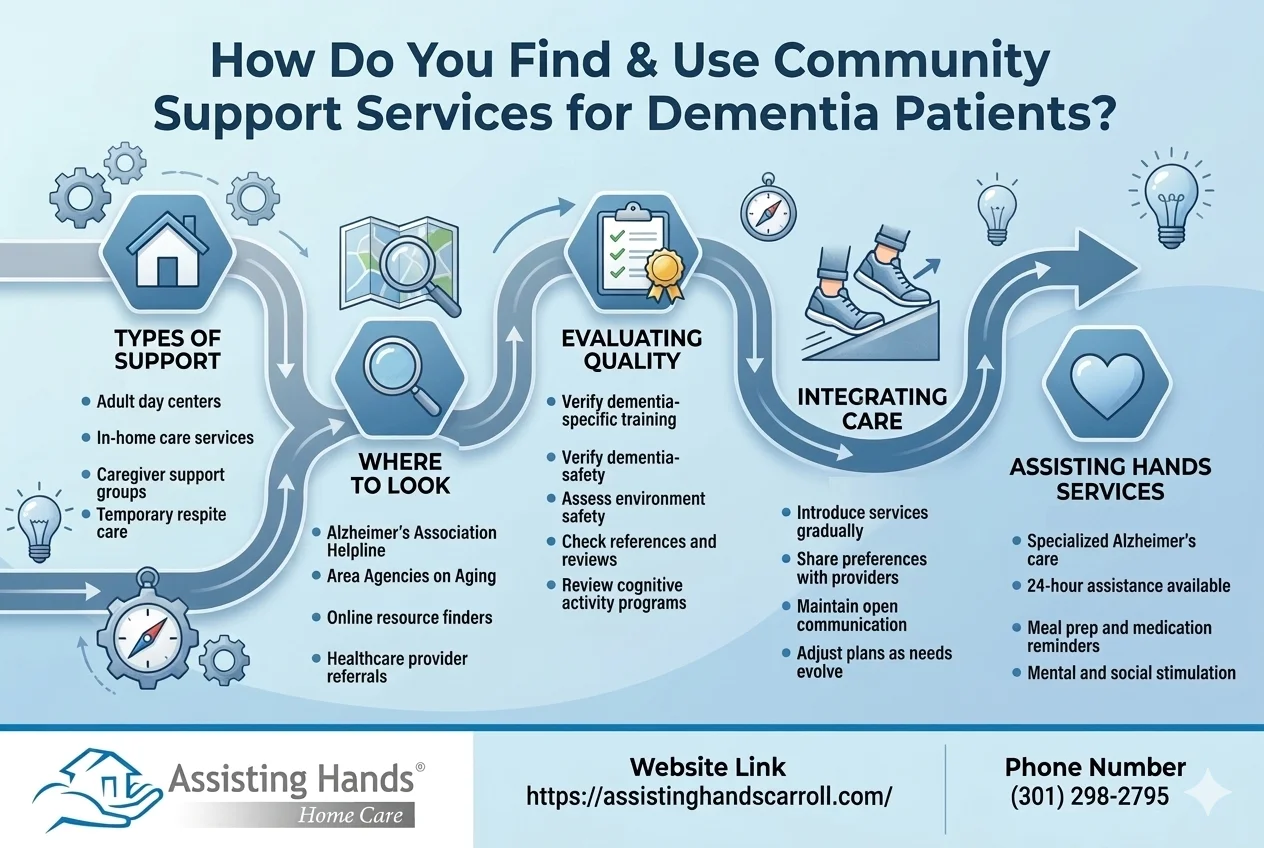
A wide range of services are available to support individuals with dementia. Understanding what each offers can help you find the right fit for your specific needs. Key services include:
- Adult day centers – These facilities offer safe, structured environments for people with dementia during the day. They provide social activities, meals, and health services, giving caregivers a needed break.
- In-home care services – Professional caregivers can come to the home to assist with personal care, meal preparation, and companionship. This allows your loved one to remain in a familiar environment.
- Support groups – These groups offer platforms for caregivers, family members, and sometimes seniors to share experiences and advice. They provide emotional comfort and practical tips for managing the challenges of dementia.
- Respite care – This service provides temporary relief for primary caregivers. It can range from a few hours to several weeks and can be provided at home, in a healthcare facility, or at an adult day center.
If you’re the primary caregiver for a senior family member in Westminster or a nearby area and you need respite care, Assisting Hands Home Care is here to help. Our home caregivers are trained to assist older adults with a wide variety of everyday tasks, including meal prep, physical activity, and personal hygiene. We also provide 24-hour care and specialized care for seniors with Alzheimer’s, dementia, and Parkinson’s.
Where to Look for Local Services
Locating the right community support services requires knowing where to look. Several organizations and online resources can guide you to local options. Start by contacting:
- The Alzheimer’s Association – Their 24/7 Helpline (800-272-3900) and website offer extensive resources, including a local chapter finder to connect you with services in your area.
- Area Agencies on Aging (AAA) – This nationwide network provides information and access to local services for older adults, including those with dementia. Use the Eldercare Locator online or by phone to find your local AAA.
- Online databases – Websites like the Community Resource Finder (a partnership between the Alzheimer’s Association and AARP) allow you to search for a variety of local resources by zip code.
- Physicians and healthcare providers – Your loved one’s doctor or neurologist can often recommend trusted local support services, from in-home care agencies to specialized adult day programs.
Families looking for top-rated Westminster home care providers can reach out to Assisting Hands Home Care. From respite care to specialized Alzheimer’s, dementia, stroke, and Parkinson’s care, there are many ways we can make life easier for seniors and their loved ones.
Evaluating Service Quality
Once you’ve identified potential support services, it’s important to evaluate their quality to ensure they’re a good fit. When assessing a service, consider the following:
- Staff training and experience – Inquire about the staff’s training in dementia care. Experienced and knowledgeable caregivers can provide better, more empathetic support.
- Facility environment – If you’re visiting a center, observe the environment. Is it clean, safe, and stimulating? Look for features that promote comfort and reduce confusion for people with dementia.
- References and reviews – Ask for references from other families who have used the service. Online reviews can also provide insight, but speaking directly with others can offer a more detailed perspective.
- Activities and programs – Review the schedule of activities. A good program will offer engaging and appropriate activities that cater to different abilities and interests, promoting cognitive and social stimulation.
Integrating Services into a Care Plan
Effectively using community support involves integrating these services into a comprehensive care plan. Start by introducing services gradually to help your loved one adjust. For example, begin with a few hours a week at an adult day center or with an in-home caregiver. Keep communication open with service providers, sharing information about your loved one’s needs, preferences, and daily routines. Regularly review and adjust the care plan as the condition progresses and needs change. For families committed to dementia care at home, integrating community services into the daily routine can provide both structure and relief for primary caregivers.
Aging in place can present a few challenges for seniors living with dementia. However, with professional dementia care that offers Westminster families peace of mind, they can still live independently at home. Families can rely on Assisting Hands Home Care to provide their elderly loved ones with mental and social stimulation, timely medication reminders, assistance with meal prep, and much more. Our caregivers are available around the clock to help your loved one live a happier and healthier life. For more information about our flexible, customizable home care plans, call one of our compassionate Care Specialists today.