
Transitioning a senior from the hospital to home requires careful coordination. The key steps include mastering the discharge plan, preparing the home for safety, organizing medications, arranging in-home support, and maintaining a balanced diet and hydration. Thoughtful planning ensures a smoother recovery and prevents readmission.
Bringing an aging loved one home after a hospital stay often brings a mix of relief and anxiety for family caregivers. While leaving the clinical environment is a positive step, managing recovery without 24/7 medical staff requires careful preparation. Understanding the benefits of home care for seniors during this critical transition period can make the difference between a successful recovery and an unnecessary hospital readmission.
Why Is Understanding the Discharge Plan Essential before Going Home?
The transition begins well before you walk out the hospital doors. A successful move depends on a clear understanding of the discharge plan, which serves as your road map for recovery. Hospitals have discharge planners or case managers whose job is to help you navigate this process, so utilize their expertise.
Don’t hesitate to ask questions until you feel confident in your ability to manage care. Before leaving the facility, ensure you have the following information:
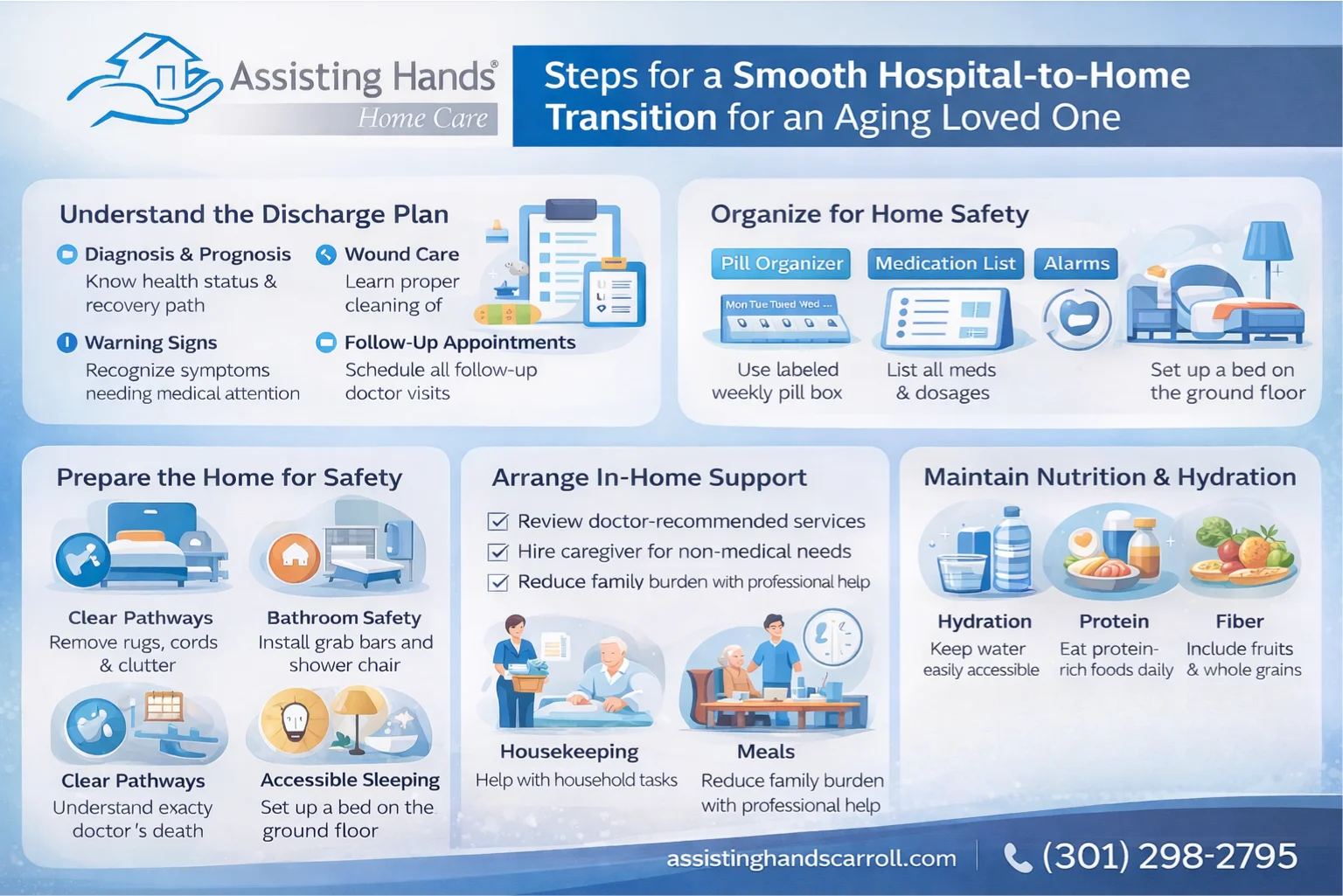
- Diagnosis and prognosis – Understand exactly what happened and what the expected recovery path looks like.
- Wound care – If there are surgical sites, ask for a demonstration of how to clean and dress them.
- Warning signs – Know exactly which symptoms require a call to the doctor and which require a trip to the emergency room.
- Follow-up appointments – Have a list of dates and times for seeing specialists or primary care physicians.
Professional caregivers can be a great boon for families who are unable to care for their loved ones without assistance. The type of Home Care Westminster seniors need can vary. Some need assistance a few hours a day, while others require more extensive around-the-clock assistance. At Assisting Hands Home Care, we tailor our care plans based on each senior’s individual care needs, and the plans can be adjusted at any time.
How Should You Prepare the Home to Prevent Falls and Injuries?
Hospitals are designed for safety, while the average home isn’t. Before your loved one arrives, conduct a thorough safety sweep of the residence to minimize the risk of falls or injuries. Seniors recovering from illness or surgery are often weaker and less steady on their feet than usual, making standard household obstacles dangerous hazards.
Focus on the areas where your loved one will spend the most time, such as the bedroom, bathroom, and living room. Consider these modifications:
- Clear pathways – Remove throw rugs, electrical cords, and clutter from walkways to prevent tripping.
- Bathroom safety – Install grab bars near the toilet and in the shower. Consider a shower chair if standing is difficult.
- Lighting – Ensure hallways and bathrooms are well lit, perhaps by adding nightlights for evening visibility.
- Accessibility – If possible, set up a temporary sleeping area on the ground floor to avoid stairs during the initial recovery phase.
How Can You Prevent Medication Errors after Discharge?
Take charge of medication organization before your loved one leaves the hospital. Ensure you’ve filled all new prescriptions before your loved one returns home so there’s no gap in treatment. Once home, implement a system to track what needs to be taken and when:
- Pill organizers – Use a clearly labeled weekly pillbox.
- Medication list – Keep an updated list of all medicines, dosages, and purposes on the refrigerator or in a central location.
- Alarms – Set reminders on a phone or clock to ensure doses aren’t missed.
Medication errors are one of the leading causes of hospital readmissions for seniors. Seniors often leave the hospital with new prescriptions that must be balanced with their existing regimen. This can lead to confusion about dosages, timing, and potential interactions.
When Should You Arrange Professional In-Home Care Support?
Professional in-home care can bridge the gap between hospital supervision and independence. Review the discharge papers to see if the doctor has recommended home health services, such as physical therapy, occupational therapy, or visiting nurses.
These services are typically covered by Medicare if prescribed by a physician. For nonmedical needs, such as bathing, dressing, or meal preparation, consider hiring a home caregiver for a few hours a day. This ensures your loved one receives professional support while giving family members necessary respite.
Family members often underestimate the physical and emotional toll of caregiving. Depending on the severity of your loved one’s condition, relying solely on family might not be feasible or safe.
For some families, caring for a senior loved one can be overwhelming at times. Luckily, Westminster families can rely on exceptional respite care provided by the experienced professionals from Assisting Hands Home Care. We are a trusted name in respite and hourly care, and our caregivers are available around the clock to assist seniors with bathing, transportation, medication reminders, exercise, and much more, allowing families the time they need to focus on other important responsibilities or just take a break.
Why Are Nutrition and Hydration Critical during Recovery at Home?
Skipping meals or dehydration can slow down the recovery process and lead to weakness or dizziness. Proper nutrition is the fuel for healing, yet appetite often diminishes after a hospital stay. Medications, fatigue, and pain can all make eating seem like a chore.
Plan meals ahead of time so you aren’t scrambling to cook while managing care duties. Stock the pantry with foods that are nutrient-dense but easy to digest.
- Hydration – Keep water easily accessible near your loved one’s bed and chair.
- Protein – Incorporate protein-rich foods like eggs, yogurt, or protein shakes to aid in tissue repair.
- Fiber – Pain medications often cause constipation, so ensure the diet includes plenty of fruits, vegetables, and whole grains.
Whether you need respite from your caregiving duties or your aging loved one needs live-in care in Westminster, Assisting Hands Home Care can meet your family’s care needs. Our dedicated caregivers are available around the clock to provide transportation to doctor’s appointments, ensure seniors take their prescribed medications, and help with a variety of tasks in and outside the home. Call Assisting Hands Home Care today to learn about our high-quality in-home care services.
Frequently Asked Questions
Can post-hospital home care help with physical therapy?
+
Yes, caregivers can assist with prescribed physical therapy exercises to aid in recovery and increase mobility.
How long does post-hospital home care last?
+
Anyone recovering from surgery, illness, or injury who needs extra support at home can benefit from these services.
Who can benefit from post-hospital home care?
+
Yes, many small businesses in California must have a surety bond to obtain or renew licenses, particularly in regulated industries.
What services are included in post-hospital home care?
+
Services may include medication organization, wound care, mobility assistance, meal preparation, and follow-up appointment coordination.
What is post-hospital home care?
+
Post-hospital home care provides support to individuals recovering at home after a hospital stay, helping them regain independence and prevent readmission.