
Coordinating care between family members and professional caregivers can feel complex, but it’s essential for seniors’ well-being. Effective communication, clear roles, and structured routines ensure that care is consistent and compassionate. Families in Westminster often juggle multiple responsibilities, making collaboration with home care providers critical. Professional home care Westminster services complement family efforts by providing trained staff, monitoring health, and offering respite support. This guide shares ten practical tips for families to streamline care, improve communication, and ensure that seniors receive high-quality, coordinated support at home.
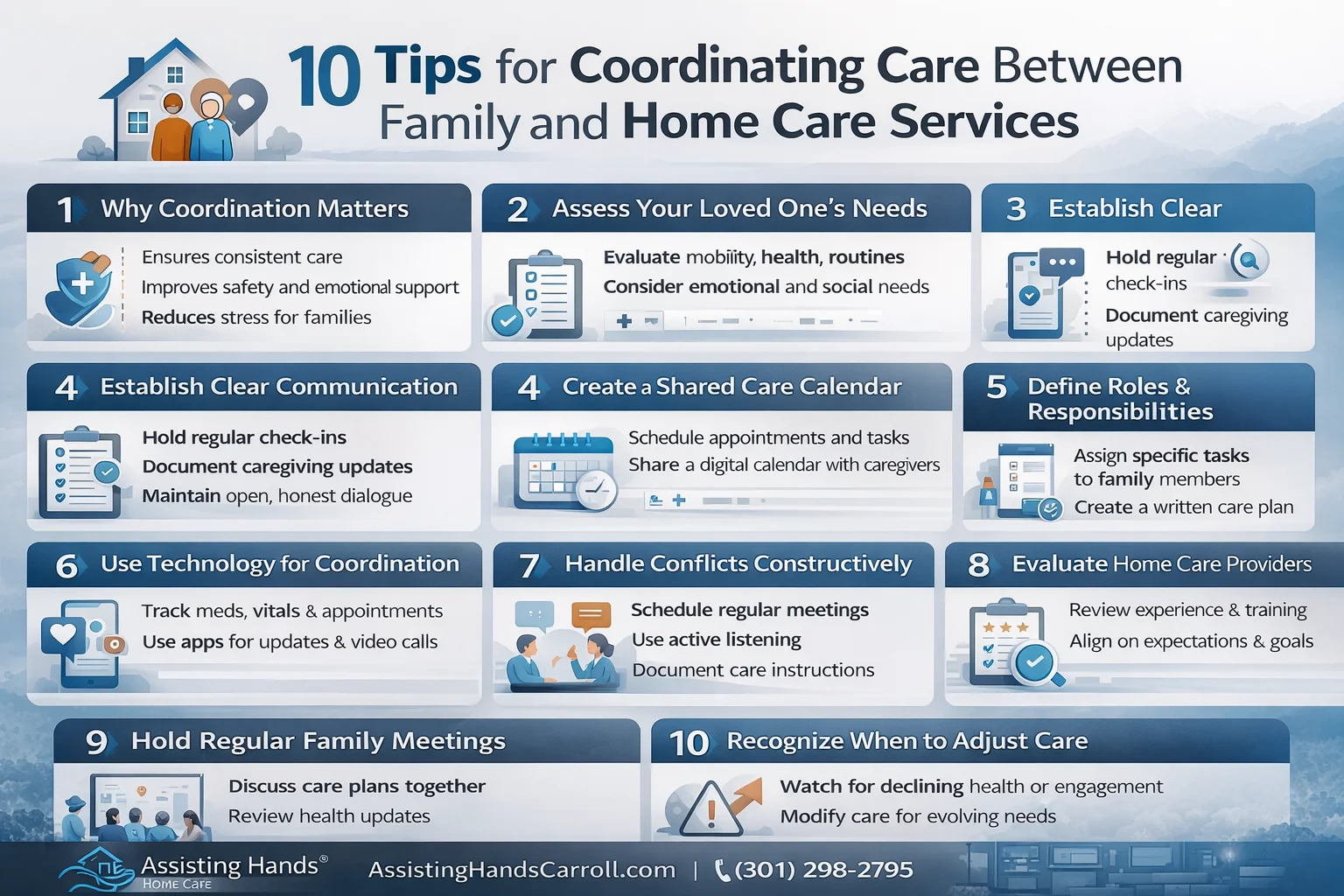
1. Why Family and Home Care Coordination Matters for Your Loved One
Coordinating care is vital to ensure seniors receive consistent support and maintain independence. Combining family involvement with professional home care Westminster guarantees safety, emotional support, and proper health monitoring. Clear communication prevents gaps in care and avoids conflicting instructions. Understanding each caregiver’s responsibilities reduces stress for both seniors and families. Coordination also ensures that medications, appointments, and daily routines are followed effectively. Families gain peace of mind knowing their loved one’s needs are met comprehensively. Effective collaboration between family and professional caregivers creates a nurturing, structured environment that promotes well-being and trust.
2. Assessing Your Loved One’s Needs Before Starting a Care Plan
Before coordinating care, families must evaluate the senior’s needs. Assess mobility, cognitive function, health conditions, daily routines, and social engagement. Professional assessments from care agencies can guide families in identifying areas requiring support. Consider emotional needs, hobbies, and preferences to provide a personalized care plan. Early evaluation helps prevent overlooked challenges and allows families to allocate responsibilities effectively. Collaborative planning ensures that family members and professional caregivers are on the same page. A thorough needs assessment is the foundation for a successful, coordinated care plan that addresses both physical and emotional well-being.
3. Establishing Clear Communication Between Family Members and Caregivers
Effective communication is the cornerstone of seamless care. Families should hold regular check-ins with caregivers to discuss routines, changes in health, and concerns. Documenting observations in shared logs or digital tools helps everyone stay informed. Professional respite care Westminster services provide trained staff who can relay updates efficiently. Open communication ensures that care is consistent, avoids misunderstandings, and empowers families to make informed decisions. Encouraging caregivers to ask questions and provide feedback fosters collaboration. Transparent communication strengthens trust, supports seniors emotionally, and creates a harmonious environment where every caregiver understands expectations.
A shared calendar is an essential tool for organizing caregiving responsibilities. Families and caregivers can include doctor appointments, medication schedules, social activities, and daily routines. Digital tools or apps can send reminders and allow multiple users to update progress. This ensures no task is missed and avoids scheduling conflicts. A visual schedule helps seniors anticipate activities and maintain consistency. Sharing calendars fosters accountability among caregivers and family members, streamlines coordination, and enhances the senior’s quality of life. Structured planning reduces stress and promotes a proactive approach to managing care effectively.
5. Defining Roles and Responsibilities for Family Care Partners
Clearly defining roles prevents overlap and confusion. Assign specific tasks such as meal prep, medication monitoring, transportation, or recreational support. Collaborating with professional home care Westminster staff ensures alignment with daily routines. Families can create a written plan that outlines responsibilities, emergency contacts, and preferred approaches. Role clarity empowers caregivers, reduces stress, and promotes accountability. Regularly reviewing roles allows adjustments as needs evolve. Defined responsibilities help maintain consistent care, support the senior’s independence, and ensure everyone contributes effectively to the coordinated care plan — and they play a key role in preventing caregiver burnout among family members who share the load.
6. Using Technology to Stay Connected and Monitor Care Progress
Modern technology makes care coordination seamless. Apps and devices can track medications, vital signs, and appointments. Video calls allow remote check-ins and provide emotional support to seniors. Shared documents and logs enable family members to monitor progress in real-time. Notifications and reminders reduce the likelihood of missed tasks. Technology also helps caregivers communicate with each other and report changes promptly. Integrating digital tools enhances efficiency, ensures transparency, and provides families with peace of mind. Using technology promotes consistency and empowers everyone involved in care to act collaboratively and informally.
7. Handling Conflicts or Disagreements Calmly and Constructively
Conflicts can arise when multiple caregivers are involved. Professional guidance from 24-hour care Westminster agencies helps mediate disagreements. Strategies include:
- Scheduling regular meetings to discuss concerns
- Using active listening to understand perspectives
- Documenting care instructions to avoid miscommunication
- Setting agreed-upon priorities for care decisions
Constructive conflict resolution ensures that the senior’s needs remain the focus. Maintaining respect, empathy, and patience strengthens teamwork and promotes a positive care environment. Resolving disagreements early prevents stress and ensures consistency in daily routines, supporting both the senior’s well-being and caregiver satisfaction.
8. Evaluating Home Care Providers and Aligning on Expected Outcomes
Selecting the right home care provider is critical for seamless coordination. Evaluate experience, training, and reputation. Discuss goals, expectations, and routines with the agency to ensure alignment. Observation visits can help families gauge compatibility with their loved one. Clear agreements regarding responsibilities and communication protocols prevent misunderstandings. Regular evaluations allow adjustments to care as needs evolve. Aligning on outcomes ensures that seniors receive personalized, consistent support. Collaboration between family members and professional caregivers fosters trust and provides a structured, high-quality care experience.
9. Establishing Regular Family Meetings to Review Care Plans
Regular family meetings are vital to assess care effectiveness. Discuss changes in health, behavior, or routines. Review goals and progress with professional caregivers. Encourage open dialogue and feedback from all members involved. These meetings provide opportunities to celebrate improvements and identify areas needing adjustment. Scheduling consistent meetings keeps everyone accountable, reduces stress, and strengthens coordination. Including seniors in discussions, when appropriate, promotes autonomy and engagement. Structured reviews ensure that care plans remain relevant and effective, supporting long-term well-being and collaboration among caregivers.
10. Recognizing Signs It’s Time to Adjust the Care Plan
Care needs change over time, and flexibility is essential. Signs that adjustments are needed include increased falls, behavioral changes, declining health, or decreased engagement. Professional home care Westminster services can guide families in modifying schedules, responsibilities, or service levels. Regular monitoring and open communication allow proactive responses. Adjustments may involve adding care hours, introducing specialized support, or revising routines. Recognizing these signs early ensures continuous, high-quality care. Families and caregivers can maintain a supportive, adaptive environment that meets the evolving needs of seniors while preserving independence and emotional well-being.
Frequently Asked Questions
1. How do I choose the best home care service?
+
Evaluate training, experience, and personality fit. Trial visits help ensure comfort and compatibility.
2. Can family members share caregiving responsibilities effectively?+
Yes, assigning clear roles and regular check-ins ensures seamless support and reduces burnout.
3. How often should care plans be reviewed?+
Monthly or quarterly reviews help address changes in health, behavior, or routine needs.
4. What technology tools help track care progress?+
Apps, shared calendars, and messaging platforms allow real-time updates and reminders.
5. How can I handle conflicts between family and caregivers?+
Use open communication, structured meetings, and mediation if needed to keep focus on senior care.