
Being a caregiver is a profoundly demanding and selfless role, but it’s easy to lose parts of yourself while dedicating your time and energy to someone else. Maintaining your sense of identity is essential for your wellbeing and helps you provide better care in the long run. Here’s how you can stay connected to yourself outside of your caregiving responsibilities.
Schedule Time for Yourself
Making time for yourself might feel impossible, but it’s a crucial first step. You schedule appointments for your loved one, and your own time deserves the same priority. Treat your personal time as a nonnegotiable commitment.
- Block it out – Use a calendar to schedule at least 15 to 30 minutes each day for an activity you enjoy. This could be reading, listening to a podcast, or simply sitting in silence with a cup of tea.
- Plan bigger breaks – Look ahead and schedule longer periods of respite, like an afternoon off each week or a full weekend every few months. Arrange for backup care from family, friends, or a professional respite service.
- Be realistic – Start small. Overcommitting can lead to guilt if you can’t follow through. Even short consistent breaks are more effective than infrequent long ones that never happen.
Family caregivers need to care for their own wellbeing. If you’re caring for an aging loved one and are feeling overwhelmed, consider hiring a professional caregiver to provide respite care Westminster families can trust. To prevent burnout, you can turn to Assisting Hands Home Care. One of our professional caregivers can assist your loved one at home while you take a nap, go to work, run errands, or go on vacation.
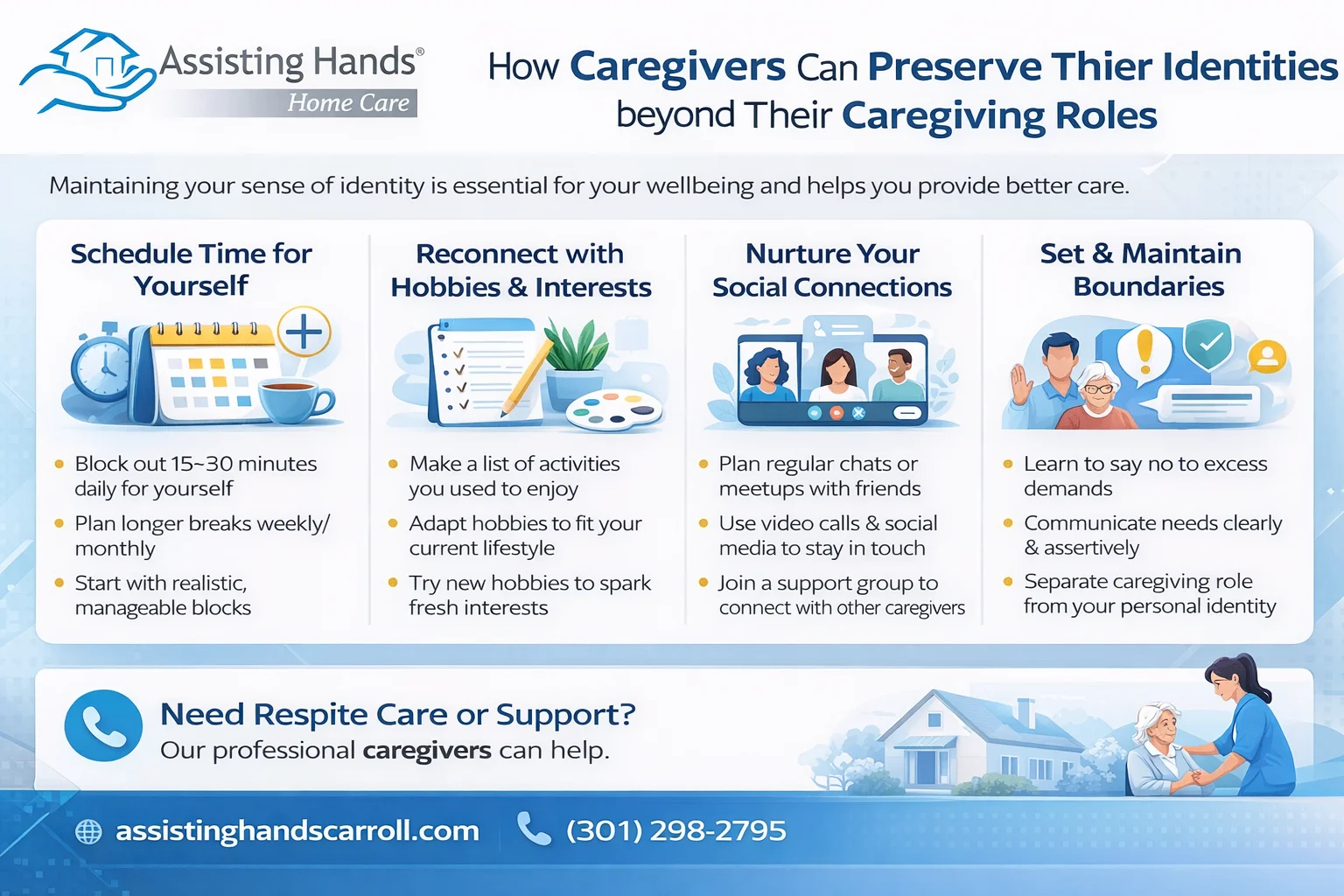
Reconnect with Your Hobbies and Interests
What did you love to do before you became a caregiver? Reigniting old passions can be a powerful way to remember who you are. It can feel strange at first, but taking small steps can help you rediscover the activities that bring you joy.
- Make a list – Write down everything you used to enjoy, from painting and gardening to playing an instrument or joining a sports league.
- Adapt your hobbies – If you can’t engage in your hobbies the same way you used to, find a modified version. If you can’t leave the house for a book club, join an online one. If you can’t spend hours gardening, tend to a few indoor plants.
- Try something new – Sometimes, a new interest can spark a fresh sense of self. Consider taking an online class or workshop in a subject you’ve always been curious about.
Staying engaged in activities you love is one of the most effective ways to guard against caregiver burnout and maintain your sense of self over the long term.
Nurture Your Social Connections
Caregiving can be isolating, making it easy to drift away from friends and social circles. These relationships are vital for emotional support and a sense of belonging. Make a conscious effort to stay connected with people who see you as more than just a caregiver.
- Schedule regular check-ins – Set up a weekly phone call with a friend or a biweekly coffee date.
- Use technology – If in-person meetings are difficult, use video calls, texting, or social media to maintain your connections.
- Join a support group – Connecting with other caregivers can provide a unique sense of understanding and community. These groups offer a space where you can share your experiences without judgment.
Caring for a senior loved one can be overwhelming at times, which puts family caregivers at risk for burnout. Seniors can face a variety of age-related challenges. Though some families choose to take on the caregiving duties, there may come a time when they need trusted Westminster home care for their loved ones. Families sometimes need respite from their duties so they can focus on their other responsibilities, and some seniors need around-the-clock assistance that their families are not able to provide. Assisting Hands Home Care is here to help.
Set and Maintain Healthy Boundaries
Boundaries are essential for protecting your emotional and physical energy. They define where your responsibility ends and another person’s begins, which is a critical part of preserving your identity.
- Learn to say no – You cannot do everything for everyone. It’s okay to decline requests that will stretch you too thin.
- Communicate your needs – Clearly and kindly tell others what you need. This might mean asking for help, requesting quiet time, or simply stating you’re not available.
- Separate your role from yourself – Remind yourself that “caregiver” is a role you fill, not the entirety of who you are. Give yourself permission to step away from that role and just be you.
If you’re the primary family caregiver for an elderly loved one, Westminster live-in care is available around the clock if you need a break from your caregiving duties or your loved one’s health has become too difficult to manage without professional expertise. At Assisting Hands Home Care, we take measures to help seniors prevent illness and injury by assisting with exercise and mobility, preparing nutritious meals, helping with bathing and other personal hygiene tasks, and much more. Reach out to us at Assisting Hands Home Care if you need compassionate professional care for your loved one. Call one of our dedicated Care Managers today to learn about the high quality of our in-home services.