
Supporting seniors with vision or hearing loss requires understanding, patience, and practical strategies that enhance their independence and quality of life. Knowing how to communicate effectively and create a supportive environment can make a significant difference in your senior loved one’s daily experience.
Create a Safe and Accessible Home Environment
Making simple modifications to living spaces can dramatically increase safety and independence for seniors with sensory impairments.
For vision loss:
- Install bright, consistent lighting throughout the home.
- Remove clutter from walkways and keep furniture in the same locations.
- Use contrasting colors for stairs, door frames, and important objects.
- Add tactile markers to commonly used items like appliances and light switches.
- Ensure handrails are secure on all stairs and in bathrooms.
For hearing loss:
- Reduce background noise when possible.
- Install visual alert systems for doorbells, smoke detectors, and phones.
- Use vibrating alarm clocks and notification devices.
- Ensure good lighting for lip reading and visual communication.
- Consider sound amplification devices for televisions and phones.
Vision and hearing impairments can have a major effect on the ability to perform everyday tasks, but help is just a phone call away. Some seniors only require help with a few daily tasks so they can maintain their independence. However, those living with serious illnesses may need more extensive assistance. Luckily, there is professional live-in care Westminster seniors can rely on. Home can be a safer and more comfortable place for your loved one to live with the help of an expertly trained and dedicated around-the-clock caregiver.
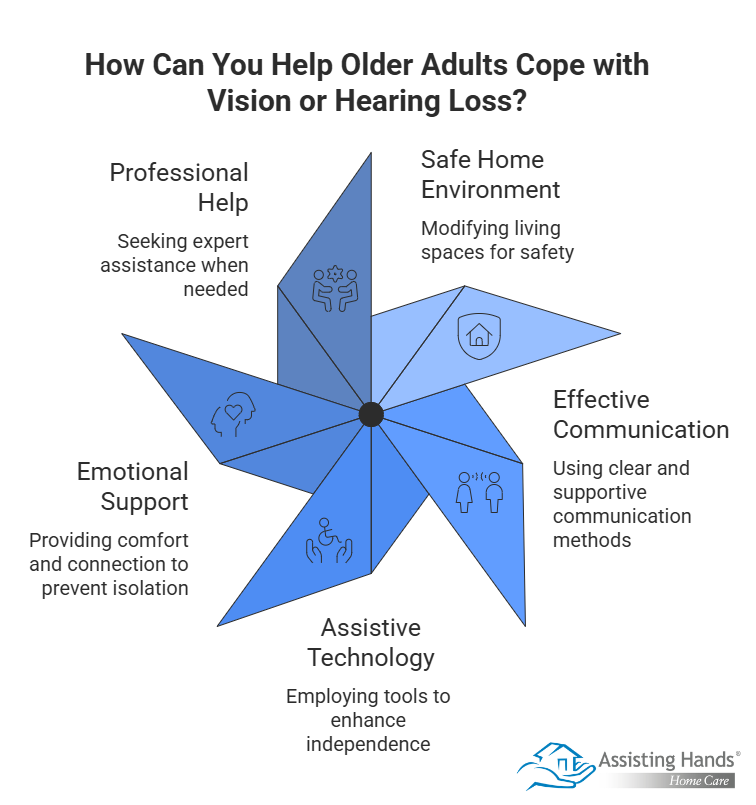
Master Effective Communication Techniques
Clear communication is essential when supporting seniors with sensory impairments.
For those with vision loss:
- Identify yourself when entering a room and announce when you’re leaving.
- Use specific directional language like “on your left” rather than “over there.”
- Describe surroundings and activities happening nearby.
- Offer your arm for guidance rather than grabbing your loved one’s arm.
- Speak in a normal tone—vision loss doesn’t affect hearing.
For those with hearing loss:
- Face your loved one directly when speaking and maintain eye contact.
- Speak clearly and at a moderate pace without exaggerating.
- Use gestures and facial expressions to support your message.
- Write down important information when necessary.
- Learn basic sign language or finger spelling if appropriate.
The type of home care Westminster seniors need can vary. Some need assistance a few hours a day, while others require more extensive around-the-clock assistance. At Assisting Hands Home Care, we tailor our care plans based on each senior’s individual care needs, and the plans can be adjusted at any time. We are a trusted provider of respite and 24-hour care, and we also offer specialized Alzheimer’s, dementia, Parkinson’s, and stroke care for seniors.
Encourage Independence through Assistive Technology
Modern technology offers numerous tools that can help seniors maintain their autonomy despite sensory challenges.
Vision assistance tools:
- Large-button phones and keyboards
- Voice-activated devices and smart home systems
- Magnifying glasses and electronic magnifiers
- Audio books and text-to-speech software
- Navigation apps designed for the visually impaired
Hearing assistance tools:
- Hearing aids and cochlear implants
- Personal amplification systems
- Captioned telephones
- Smartphone apps that convert speech to text
- TV listening systems and headphones
Provide Emotional Support and Social Connection
Sensory loss can lead to isolation and depression, making emotional support crucial for overall wellbeing.
- Encourage participation in community activities and support groups.
- Help your loved one maintain connections with friends and family through technology.
- Be patient and understanding during the adjustment period.
- Celebrate small victories and progress.
- Connect your loved one with counseling services if needed.
- Facilitate introductions to others facing similar challenges.
Know When to Seek Professional Help
Recognizing when additional support is needed ensures seniors receive comprehensive care.
Signs to watch for:
- Frequent falls or accidents in familiar environments
- Withdrawal from social activities your loved one previously enjoyed
- Difficulty organizing medications or daily tasks
- Signs of depression or anxiety
- Rapid changes in vision or hearing abilities
Professional resources:
- Audiologists and hearing specialists
- Ophthalmologists and low-vision specialists
- Occupational therapists who specialize in sensory impairments
- Social workers familiar with senior services
- Local organizations for the blind or deaf community
When these signs appear, exploring the benefits of home care for seniors with a professional agency can help families put the right support in place quickly and compassionately.
Remember supporting seniors with vision or hearing loss is about empowering them to live as independently as possible while ensuring they feel valued and connected to their community.
Living independently is important for seniors who want to maintain a high quality of life and continue enjoying their senior milestones. For some, this simply means receiving help with tasks that have become more challenging to manage over time. Even when families have the best intentions, they may not have the time to provide the care their elderly loved ones need and deserve. If your loved one needs help for a few hours a day or a few days a week, reach out to Assisting Hands Home Care, a trusted provider of respite care Westminster seniors can depend on. Call one of our friendly Care Specialists today to learn more about our customized care plans.