
Finding reliable and compassionate support for a loved one at home can be overwhelming. Families often have questions about services, caregiver qualifications, and safety. This FAQ guide provides clear answers to common concerns regarding in-home care in Westminster, helping families make informed decisions. From personal care assistance to specialized dementia support, these practical insights cover what to expect, how to choose caregivers, and how to ensure your loved one’s daily routines, independence, and emotional well-being are maintained. Understanding the benefits of home care for seniors is the first step toward making a confident, informed choice for your family.
1. How do I know if my loved one truly needs in-home care in Westminster?
Recognizing the right time for home care Westminster can be challenging. Signs include difficulty performing daily activities, missed medications, reduced social engagement, frequent falls, or memory challenges. Emotional indicators such as anxiety, depression, or withdrawal are equally important. Consulting with healthcare providers and observing changes in routines can guide families. Professional agencies providing home care Westminster often offer assessments to determine care level and frequency. Early planning ensures a smoother transition, reduces stress, and maintains safety and independence. Selecting the right service preserves dignity and improves the quality of life for seniors and peace of mind for families.
2. What daily activities can in-home caregivers realistically help with?
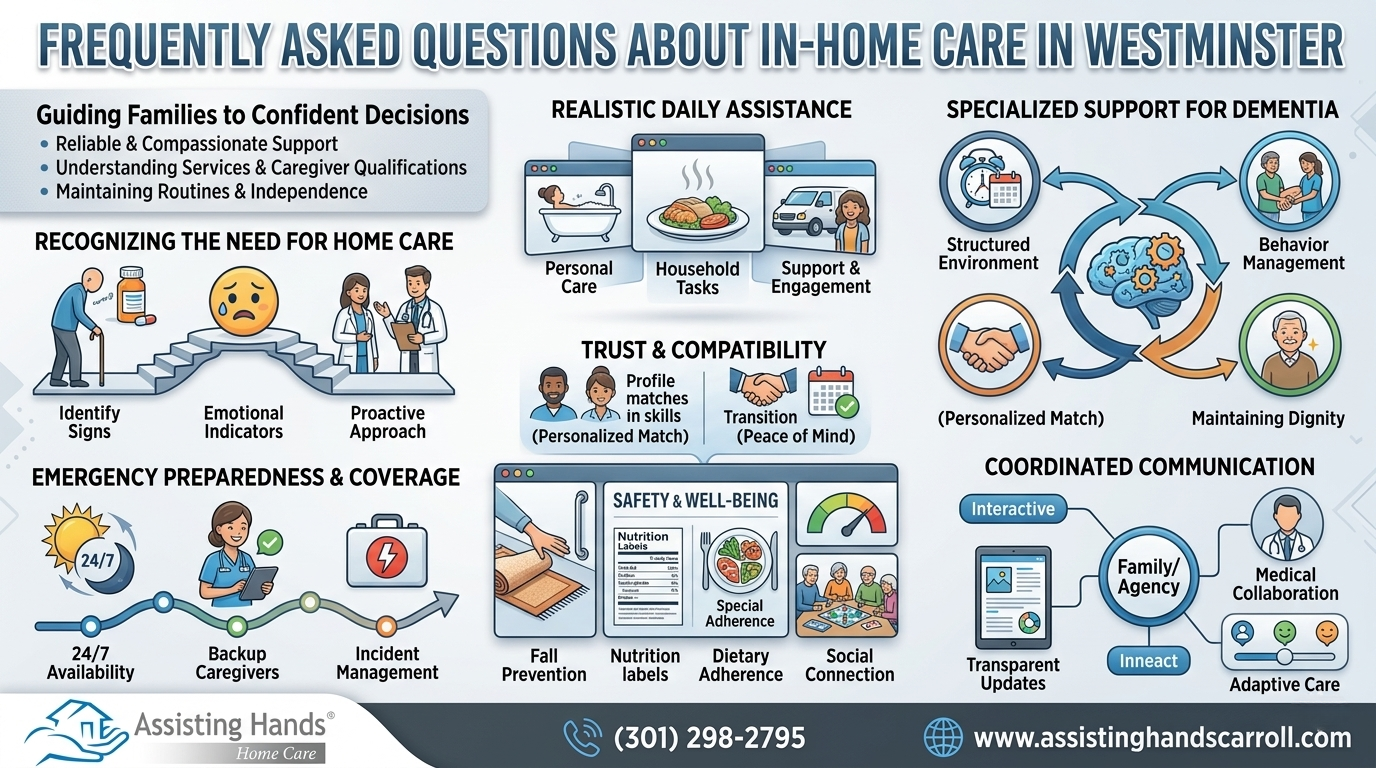
In-home caregivers assist with a wide range of daily tasks to ensure seniors remain comfortable and independent. This includes bathing, dressing, grooming, meal preparation, medication reminders, light housekeeping, and transportation to appointments. They also provide companionship, emotional support, and assistance with mobility or exercise routines. Caregivers can help seniors stay socially engaged, maintain routines, and participate in hobbies or interests safely. The level of assistance depends on individual needs and can be adjusted as those needs change. Professional in-home care promotes both physical safety and emotional well-being for seniors living at home.
3. How can in-home care support seniors with memory loss or dementia?
Seniors experiencing cognitive decline benefit greatly from specialized dementia care Westminster services. Caregivers provide structured routines, memory prompts, and personalized activities to reduce confusion and agitation. Emotional support, patience, and gentle guidance help seniors feel safe and engaged. Agencies may train caregivers in behavior management, communication strategies, and daily supervision for memory-impaired individuals. Creating familiar and predictable routines minimizes stress and improves quality of life. Families gain reassurance that their loved one is monitored, socially engaged, and emotionally supported, ensuring that care aligns with cognitive abilities and promotes independence while maintaining dignity.
4. Can I choose specific caregivers based on personality or experience?
Many agencies allow families to request caregivers who match personal preferences, personality, or specialized experience. For seniors, comfort and compatibility with caregivers improve cooperation and reduce stress. Some may prefer caregivers with experience in mobility assistance, dementia care, or medical tasks. Agencies usually conduct interviews or trial visits to determine fit. Communication about routines, hobbies, and specific care requirements ensures the caregiver aligns with the senior’s needs. Personalized caregiver selection fosters trust, emotional well-being, and consistent quality of care, creating a positive experience for both seniors and family members.
Reputable agencies offering home care Westminster have protocols for emergencies and caregiver absences. Backup staff or on-call caregivers are available to ensure uninterrupted care. Agencies maintain detailed care plans and schedules, so substitutes can step in efficiently. Communication with family members is prioritized to update them about changes or incidents. Emergency training equips caregivers to handle medical events, falls, or urgent needs calmly and safely. These measures provide reassurance that seniors continue receiving consistent, high-quality support even when primary caregivers are temporarily unavailable, maintaining routines and emotional stability.
6. What steps do agencies take to make seniors feel comfortable with new caregivers?
Agencies prioritize introductions and gradual transitions for new caregivers. Orientation visits allow seniors to meet caregivers, discuss routines, and build rapport. Agencies may match caregivers with personalities that align with the senior’s preferences. Open communication, clear expectations, and family involvement help reduce anxiety. Caregivers are trained to be patient, attentive, and responsive to emotional cues. Familiarizing seniors with routines, tasks, and schedules before fully assuming responsibility creates trust. These practices ensure seniors feel safe, respected, and comfortable while fostering positive relationships and reducing stress during care transitions.
7. Are there options for overnight or live-in care in Westminster homes?
Yes, many agencies provide live-in care Westminster for seniors needing round-the-clock support. This includes overnight supervision, assistance with nighttime routines, medication management, and emergency response. Live-in caregivers also offer companionship, emotional support, and help maintain daily activities uninterrupted. Families benefit from peace of mind knowing a trained professional is available 24/7. Flexible scheduling allows customization according to the senior’s specific needs. Choosing live-in care ensures continuity, consistent monitoring, and personalized attention while preserving the senior’s independence and comfort in a familiar home environment.
8. How is communication handled between caregivers, seniors, and family members?
Effective communication is critical for successful in-home care. Agencies often provide care logs, regular updates, and digital reporting to keep family members informed. Caregivers communicate changes in routines, health conditions, or behavioral concerns promptly. Scheduled meetings or phone calls allow families to provide input and ask questions. Transparent communication ensures seniors receive care aligned with their preferences and needs. This collaboration builds trust, reduces misunderstandings, and promotes consistency in routines. Open dialogue supports emotional well-being and ensures everyone involved is aligned with the senior’s care plan.
Absolutely. Caregivers encourage social interaction through activities, conversation, and outings. Seniors can participate in hobbies, community events, or light exercises with caregiver support. Maintaining engagement prevents isolation, supports cognitive function, and enhances emotional health. Structured routines, group activities, or family visits incorporated into daily care promote mental stimulation and social connection. In-home care provides companionship and opportunities for meaningful engagement, contributing to overall quality of life and reducing risks associated with loneliness or depression among seniors.
10. What safety protocols are in place to prevent falls or accidents at home?
Caregivers follow safety measures tailored to the home environment and the senior’s mobility. This includes removing tripping hazards, installing grab bars, ensuring proper lighting, and supervising high-risk activities. Agencies conduct risk assessments and train caregivers in fall prevention, emergency response, and safe mobility techniques. Seniors receive guidance on using assistive devices and maintaining balance. Continuous monitoring and proactive safety adjustments minimize accidents. These protocols promote independence while ensuring the senior remains secure, reducing stress for both the individual and family members.
11. How do agencies coordinate care with doctors or other healthcare professionals?
Agencies maintain communication with physicians, therapists, and healthcare providers to ensure comprehensive care. Caregivers can report symptoms, track medications, and follow treatment plans. Coordination allows early detection of health changes and ensures interventions are timely. Some agencies provide electronic updates or logs to clinicians, helping integrate in-home care with broader medical care. This collaboration ensures continuity, reduces errors, and enhances the overall quality of life. Seniors receive care that aligns with medical recommendations while families remain informed about health status and progress.
12. Is there flexibility if my loved one’s care needs change suddenly?
Yes, reputable agencies offer flexible care plans to adapt to evolving needs. Whether a senior’s mobility, cognition, or health status changes, care schedules can be modified. Short-term adjustments, increased support, or reduced hours are accommodated based on assessment. Flexibility ensures that seniors receive appropriate assistance without disruption. Family input is integrated to maintain comfort and routine. Adaptive care prevents emergencies and supports long-term independence while allowing families to respond confidently to any unexpected changes in daily requirements.
13. How do caregivers handle meal preparation for special diets or restrictions?
Caregivers are trained to prepare meals following dietary guidelines, medical restrictions, and personal preferences. They can accommodate low-sodium, diabetic, gluten-free, or other special diets. Caregivers ensure proper nutrition, portion control, and hydration while assisting seniors who may have difficulty cooking independently. Meal times are incorporated into daily routines, providing structure and social interaction. This support maintains health, prevents complications, and allows seniors to enjoy safe, balanced meals while families have peace of mind regarding dietary adherence and overall nutrition.
14. Can in-home care help seniors maintain hobbies, routines, and independence?
Yes, professional home care Westminster services focus on preserving seniors’ routines and interests. Caregivers assist with hobbies, exercise, personal projects, and social activities, encouraging autonomy and mental engagement. Structured support ensures safety while promoting independence. Emotional support, patience, and routine reinforcement help seniors remain confident and connected. Families can rely on caregivers to create an environment where the senior’s preferences and daily rhythms are respected, leading to higher satisfaction, reduced stress, and enhanced overall quality of life within the comfort of home.
15. What should I do if I notice my loved one isn’t comfortable with their assigned caregiver?
It’s important to address concerns promptly with the agency. Open communication ensures the caregiver can be reassigned or adjustments made to improve compatibility. Agencies often offer trial periods, introductions, and feedback mechanisms. Families should document observations and express preferences clearly. Effective agencies prioritize matching caregivers with personalities, experience, and routines suited to the senior. Addressing discomfort early prevents stress, enhances emotional well-being, and ensures consistent, high-quality care that aligns with the senior’s needs and expectations.