
Supporting a loved one with memory challenges can feel overwhelming for families in Carroll County. Understanding how to maintain routines, provide emotional support, and encourage mental stimulation is critical for seniors’ well-being. Families can play an active role in daily care, from assisting with tasks to creating a safe environment. Professional home care Westminster services complement family efforts by providing trained caregivers, structured routines, and personalized attention. This guide explores ten practical ways to help seniors maintain independence, cognitive function, and emotional health while ensuring families feel confident and supported.
1. Understanding Memory Challenges in Seniors and Why Family Support Matters
Memory challenges in seniors often range from mild forgetfulness to more serious cognitive issues, including early-stage dementia. Recognizing the signs early allows families to provide timely support. Emotional reassurance, patient communication, and consistent routines are key. Collaborating with healthcare professionals can help identify the level of care needed. Agencies offering home care Westminster provide trained caregivers who understand these challenges and can support daily routines. Family involvement enhances emotional stability, builds trust, and reduces confusion for seniors. Combining professional care with personal support ensures a safe and nurturing environment.
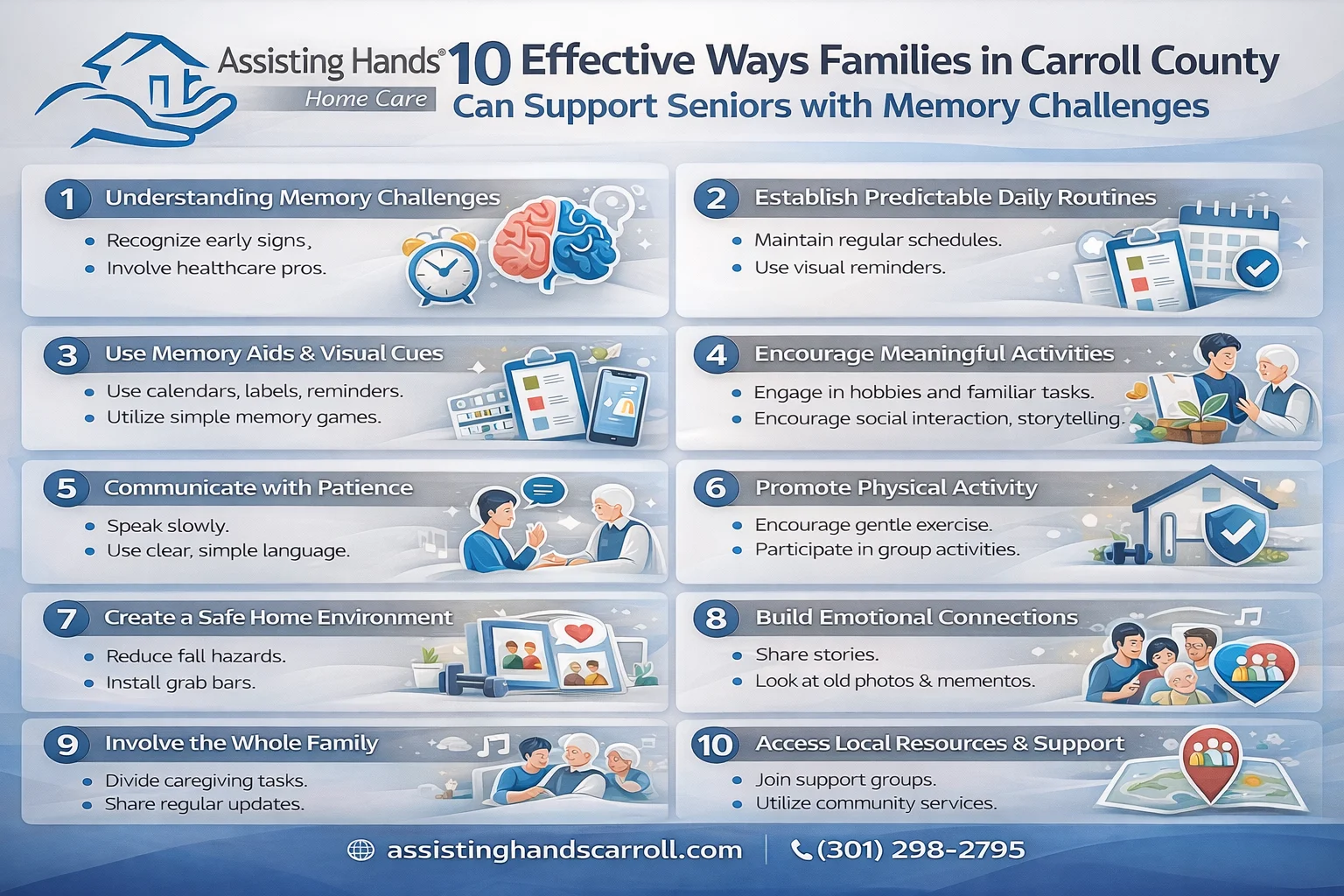
2. Establishing Predictable Daily Routines to Reduce Confusion
Creating a structured daily routine helps seniors feel secure and reduces anxiety. Consistent wake-up times, meals, and bedtime rituals allow memory-impaired individuals to anticipate activities. Incorporating small breaks and regular exercise encourages engagement without causing fatigue. Visual schedules or reminders can help seniors stay on track. Family members can collaborate with caregivers to maintain this consistency. A predictable routine reduces stress, minimizes wandering or disorientation, and supports cognitive function. Over time, structured days help seniors maintain independence while allowing families to monitor well-being effectively.
3. Using Memory Aids and Visual Cues to Help Seniors Remember Tasks
Memory aids are essential tools for seniors facing cognitive decline. Utilizing calendars, labeled drawers, reminder notes, and smartphone alerts can reinforce daily tasks. Activities that stimulate memory, such as looking at photo albums or playing simple matching games, enhance recall and engagement. For seniors requiring specialized support, Alzheimer’s care Westminster services provide trained caregivers who implement customized memory exercises and cues. Integrating memory aids into daily life helps seniors maintain independence while reducing frustration. Consistent use of these tools fosters confidence, improves routine adherence, and encourages cognitive stimulation in a supportive environment.
4. Encouraging Meaningful Activities That Stimulate Memory and Purpose
Engaging seniors in purposeful activities promotes mental stimulation and emotional well-being. Hobbies like painting, gardening, or crafting help seniors focus attention while maintaining fine motor skills. Storytelling, reminiscing, or listening to music fosters cognitive engagement and emotional comfort. Families can collaborate with caregivers to tailor activities based on interests and abilities. Even simple tasks such as folding laundry or organizing items can provide a sense of accomplishment. Meaningful activities reduce stress, encourage social interaction, and support memory retention. Regularly changing or rotating activities prevents monotony and keeps seniors motivated and involved.
5. Communicating With Patience and Clarity to Improve Daily Engagement
Effective communication is essential for seniors with memory challenges. Speaking slowly, using clear instructions, and avoiding jargon reduces confusion. Repeating or rephrasing information patiently helps seniors understand tasks. Positive reinforcement and acknowledgment of efforts promote confidence. Agencies providing home care Westminster emphasize training caregivers in compassionate communication techniques. Families can practice active listening and maintain eye contact to enhance understanding. Engaging seniors in conversations about their interests or memories encourages interaction and prevents social isolation. Thoughtful communication strengthens trust, reduces frustration, and enhances cooperation during daily activities.
6. Helping Seniors Stay Physically Active for Better Brain Health
Physical activity supports both cognitive and overall health. Gentle exercises such as walking, stretching, or chair yoga improve circulation, balance, and energy levels. Seniors can also participate in group exercise or family-led activities. Movement encourages mental engagement, reduces agitation, and improves mood. Caregivers can incorporate exercises into daily routines, ensuring safety while promoting consistency. Regular physical activity reduces fall risks and supports independent mobility. Combining exercise with mental stimulation, such as memory games during activity breaks, provides holistic care. Families and caregivers working together ensure seniors remain active, engaged, and confident in their abilities, making professional dementia care at home an invaluable resource for maintaining this consistency.
7. Creating a Safe and Supportive Home Environment for Memory Challenges
A well-organized home reduces confusion and prevents accidents. Agencies offering hourly home care Westminster can assess homes for hazards and recommend improvements. Key measures include:
- Installing grab bars in bathrooms
- Removing loose rugs or clutter
- Labeling rooms and drawers
- Ensuring adequate lighting
- Securing potentially dangerous items
These steps minimize fall risks and promote independence. Creating familiar spaces with personal items and photos fosters emotional comfort. Safety-focused adjustments combined with caregiver supervision provide a nurturing environment, allowing seniors to feel secure while families maintain peace of mind.
Memory challenges can cause frustration or loneliness. Encouraging seniors to share past experiences, stories, or family traditions strengthens emotional bonds. Using photo albums, music, or mementos triggers positive memories and stimulates conversation. Families and caregivers can engage in structured reminiscence activities to reinforce identity and self-esteem. Emotional connection reduces stress, increases participation in daily activities, and supports mental health. Regular interaction fosters trust, provides comfort, and helps seniors feel valued. This approach complements cognitive strategies, making daily routines more enjoyable and meaningful for both seniors and caregivers.
9. Involving the Whole Family in Ongoing Memory Support Plans
Collaborative caregiving ensures consistent support for seniors. Families can divide responsibilities, such as coordinating appointments, engaging in activities, or tracking progress. Regular discussions help identify changes in behavior or needs. Open communication with professional caregivers enhances understanding and alignment. Sharing caregiving responsibilities prevents burnout and ensures seniors receive continuous attention. Involving multiple family members strengthens emotional connections and provides diverse social engagement. A coordinated plan allows flexibility, encourages participation, and enhances the overall quality of care while keeping the senior comfortable and supported.
10. Accessing Local Resources and Support Groups for Families in Carroll County
Connecting with local organizations provides education, social support, and respite opportunities. Support groups, senior centers, and volunteer programs offer guidance for families navigating memory challenges. Agencies offering home care Westminster can recommend resources tailored to seniors’ needs. Accessing local Alzheimer’s or dementia programs provides caregivers with strategies, workshops, and peer networks. Community involvement reduces isolation for both seniors and families, creating a sense of shared experience. Families can leverage these resources to stay informed, build support networks, and enhance daily care quality, ensuring seniors receive well-rounded assistance in a supportive environment.
Frequently Asked Questions
1. How do I choose the right caregiver for my loved one?
+
Assess experience, training, and personality compatibility. Agencies can provide trial visits to ensure a good fit.
2. Can seniors with memory challenges live safely at home alone for part of the day?+
Partial independence is possible with safety modifications, monitoring tools, and scheduled caregiver visits.
3. What activities help slow memory decline?+
Engage in hobbies, puzzles, reminiscence exercises, physical activity, and social interactions regularly.
4. How can I reduce stress as a family caregiver?+
Use support groups, respite care, structured schedules, and delegate tasks to professional caregivers.
5. Are there local programs in Carroll County for family support?+
Yes, senior centers, Alzheimer’s associations, and community groups offer workshops and support networks.