
Most adult children begin checking in on their aging parents daily when they notice meaningful changes in their parents’ health, cognitive sharpness, or ability to manage day-to-day tasks on their own. This shift often happens gradually, but recognizing when and why it matters can make a real difference in your parents’ safety and quality of life.
What Triggers Daily Check-Ins?
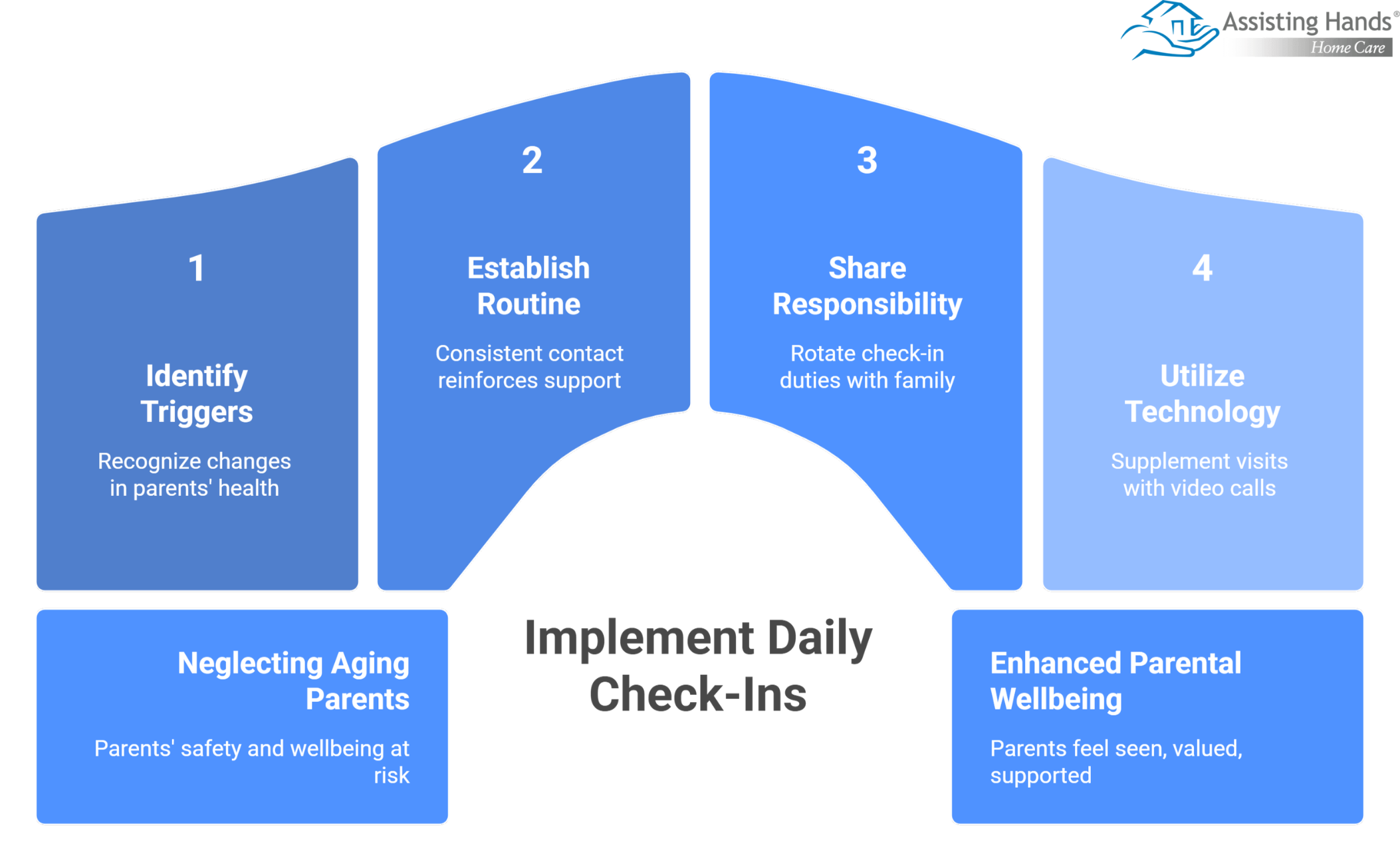
The move from occasional calls to daily contact is rarely planned. It’s usually prompted by a specific event or a pattern of small concerns that add up over time. Common triggers include:
- A fall or medical emergency
- Noticeable memory lapses or confusion
- Missed medications or skipped meals
- Increased social isolation or withdrawal
- A recent diagnosis, such as dementia or heart disease
- A parent living alone following the loss of a spouse
At What Age Do Adult Children Typically Start Checking In?
There’s no universal age, but daily check-ins tend to begin when parents are in their mid-to-late 70s or older. That said, health status matters far more than age. An active, healthy 80-year-old may need far less oversight than a 68-year-old managing a serious chronic illness. The right time to increase contact is when your parent’s circumstances—not just his or her age—call for it.
Why Do Daily Check-Ins Matter?
Regular contact does more than provide reassurance. It plays a meaningful role in your parent’s wellbeing and safety:
- Early detection – Frequent contact helps you spot changes in mood, behavior, or physical health before they escalate.
- Reduced isolation – Loneliness is a serious health risk for older adults, linked to cognitive decline and depression. A daily call or visit can counter this.
- Faster emergency response – If something goes wrong, you’re more likely to catch it quickly.
- Stronger connection – Consistent check-ins reinforce that your parent is seen, valued, and supported.
This kind of regular attention is one of the simplest yet most powerful ways to protect senior health at home, addressing both physical safety and emotional wellbeing at the same time.
How Can Adult Children Make Check-Ins Sustainable?
Daily check-ins can feel overwhelming, especially for adult children who are also managing careers, children, or their own health. A few strategies can help:
- Share the responsibility – If you have siblings or other family members nearby, rotate check-in duties.
- Use technology – Video calls, medical alert devices, and smart home sensors can supplement in-person visits.
- Keep it simple – A 10-minute call can be just as meaningful as a long visit—consistency matters more than duration.
- Set boundaries – It’s okay to establish a routine that works for both of you rather than being available around the clock.
When Is It Time to Consider More Formal Support?
Daily check-ins are often the first step in a longer caregiving journey. It may be time to explore additional support when:
- Your parent can no longer manage personal hygiene, cooking, or medications safely
- You notice rapid physical or cognitive decline
- Your own health or wellbeing is being significantly affected by caregiving demands
- Your parent expresses a desire for more structured companionship or care
Options worth exploring include in-home care services, adult day programs, assisted living communities, or a formal care assessment from a geriatric specialist.
Whether you need respite from your caregiving duties or your aging loved one needs 24-hour home care in Westminster, Assisting Hands Home Care can meet your family’s care needs. Our dedicated caregivers are available around the clock to provide transportation to doctor’s appointments, ensure seniors take their prescribed medications, and help with a variety of tasks in and outside the home.
Many seniors prefer aging in place over moving to assisted living facilities. If your senior loved one needs assistance to remain safe and comfortable while living at home, reach out to Assisting Hands Home Care, a leading Westminster home care agency. Our dedicated in-home caregivers can assist with meal prep, bathing and grooming, exercise, medication reminders, and many other important tasks. If you need professional home care for your loved one, reach out to one of our Care Specialists today.
Frequently Asked Questions
How do I know if my aging parent needs daily check-ins?
+
Watch for signs like increased forgetfulness, difficulty with daily tasks, unexplained weight loss, or a recent health event. These are strong indicators that more frequent contact is warranted.
What’s the best way to check in on an aging parent who lives far away?
+
Regular video or phone calls, combined with remote monitoring tools like medical alert systems or smart home devices, can bridge the distance effectively.
How do I bring up daily check-ins without making my parent feel like a burden or losing independence?
+
Frame the conversation around connection rather than concern. Let your parent know that you want to stay in closer touch, and involve him or her in deciding what that looks like day to day.
What if my parent refuses help or check-ins?
+
Resistance is common and often stems from a desire to maintain independence. Try to find a middle ground—starting with less frequent low-key contact can ease your parent into a routine without feeling monitored.
Living independently is important for seniors who want to maintain a high quality of life. For some, this simply means receiving help with tasks that have become more challenging to manage over time. Even when families have the best intentions, they may not have the time to provide the care their elderly loved ones need and deserve. If your loved one needs help to age in place as independently as possible, reach out to Assisting Hands Home Care, a trusted provider of respite, live-in, and overnight care Westminster seniors can depend on.
Can daily check-ins delay the need for assisted living?+
Yes, in many cases. Regular oversight helps you catch health issues early, supports medication adherence, and reduces isolation—all factors that can help aging parents remain safely at home for longer.