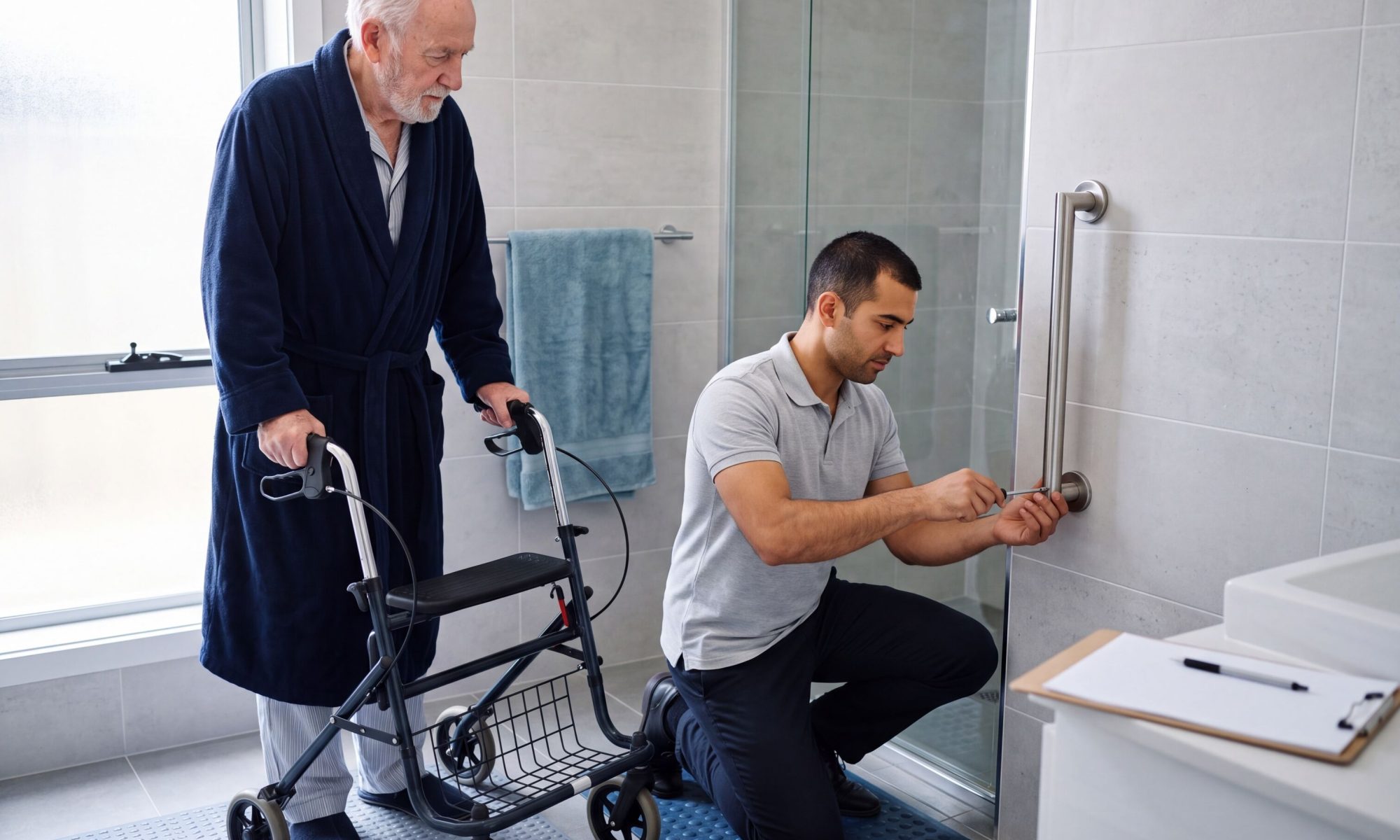
Setting up a safe bathroom for dementia care means reducing fall risks, simplifying the space, and adding visual cues that make each step easy to follow. Grab bars, nonslip surfaces, clear labeling, and good lighting are the foundation of a safer, calmer bathroom routine.
The bathroom is one of the most hazardous rooms for a person living with dementia, with slippery surfaces, confusing layouts, and hard edges all posing daily risks. A few thoughtful changes can turn this space into one that feels secure and easy to navigate. For a broader look at making the home safer for older adults with dementia, these principles extend well beyond the bathroom. Below, you’ll find practical tips to make the bathroom safer for everyday dementia care.
How Do You Prevent Falls in the Bathroom?
Falls are the biggest concern in any bathroom, and a few targeted upgrades can make a real difference:
- Install grab bars near the toilet, shower, and bathtub to provide steady support.
- Use nonslip mats inside and outside the tub or shower.
- Add a shower chair or bench so bathing can be done while seated.
- Apply nonslip strips to the floor and any slick tile surfaces.
- Keep the floor clear of rugs, cords, and clutter that could cause tripping.
Understanding how at-home care helps prevent falls can help families build a more comprehensive safety plan that goes beyond individual room modifications.
The cognitive challenges that accompany dementia often leave aging adults unable to manage everyday tasks, which puts their safety and health at risk. Certain age-related conditions can make it more challenging for seniors to age in place safely and comfortably, but 24-hour home care experts are available around the clock to help Westminster seniors manage their health. Whether your loved one is living with dementia or recovering from a stroke, you can trust the professional caregivers from Assisting Hands Home Care to enhance his or her quality of life. At Assisting Hands Home Care, we take measures to help seniors prevent illness and injury by assisting with exercise and mobility, preparing nutritious meals, helping with bathing and other personal hygiene tasks, and much more.
What Lighting Works Best for a Dementia-Friendly Bathroom?
Good lighting reduces confusion and can prevent accidents, especially at night:
- Use bright, even lighting that removes shadows and dark corners.
- Add motion-sensor night lights so the path to the toilet is always visible.
- Avoid glare from shiny floors or harsh bulbs, which can be disorienting.
- Keep light switches easy to find by marking them with contrasting tape or color.
How Can You Make the Bathroom Easier to Understand?
People with dementia often have difficulty recognizing objects or remembering how to use them. Simplifying the space helps:
- Label drawers and cabinets with words or pictures (e.g., “towels,” “soap”).
- Use a colored toilet seat that contrasts with the floor and walls to make it stand out.
- Remove or lock away items that could cause confusion, such as cleaning products or unused appliances.
- Keep only essential items on the counter to reduce visual clutter.
These simple modifications are a key part of successful dementia care at home, helping reduce confusion and allowing seniors to maintain greater independence in their daily hygiene routines.
How Do You Control Water Temperature Safely?
Burns from hot water are a serious risk, so managing temperature matters:
- Set the water heater to 120°F (49°C) or lower to prevent scalding.
- Install anti-scald devices on faucets and showerheads.
- Use color-coded or labeled faucets so hot and cold are easy to tell apart.
- Test the water before each bath or shower.
What Small Changes Add Everyday Comfort and Dignity?
Comfort and independence go hand in hand with safety:
- Choose easy-to-use fixtures like lever handles instead of round knobs.
- Provide a handheld showerhead for more control and gentler bathing.
- Keep towels and robes within easy reach to maintain warmth and privacy.
- Establish a consistent routine so the bathing experience feels familiar and calm.
Many seniors prefer aging in place over moving to assisted living facilities. If your senior loved one needs assistance to remain safe and comfortable while living at home, reach out to Assisting Hands Home Care, a leading Westminster homecare services agency. Our dedicated in-home caregivers can assist with meal prep, bathing and grooming, exercise, medication reminders, and many other important tasks.
Aging in place can present a few challenges for seniors living with dementia. However, with professional dementia home care that offers Westminster families peace of mind, they can still live independently at home. Families can rely on Assisting Hands Home Care to provide their elderly loved ones with mental and social stimulation, timely medication reminders, assistance with meal prep, and much more. Our caregivers are available around the clock to help your loved one live a happier and healthier life. Whether your loved one needs minor help with daily tasks or extensive 24-hour care, give us a call today.
Frequently Asked Questions
What’s the most important bathroom safety feature for dementia care?
+
Grab bars are often the single most valuable addition, as they provide stability near the toilet, shower, and tub, where falls are most likely.
Should you lock the bathroom door in a dementia-friendly home?
+
It’s best to remove or disable interior locks so your loved one cannot accidentally lock him or herself in while still preserving privacy with a simple curtain or “occupied” sign.
What color should the toilet seat be for someone with dementia?
+
A bold contrasting color like red or dark blue helps the toilet stand out from the surrounding floor and walls, making it easier to locate and use.
How can you reduce bathing anxiety for a person with dementia?
+
Keep the room warm, maintain a consistent routine, use a handheld showerhead, and speak calmly to make the experience feel familiar and reassuring.
Are bath mats safe to use in a dementia-friendly bathroom?
+
Nonslip mats inside the tub are helpful, but loose rugs on the floor should be removed, since they can shift underfoot and create a tripping hazard.