
Traveling with a senior loved one who has dementia requires careful planning and thoughtful preparation. With the right strategies, you can create meaningful travel experiences that prioritize safety while maintaining dignity and comfort.
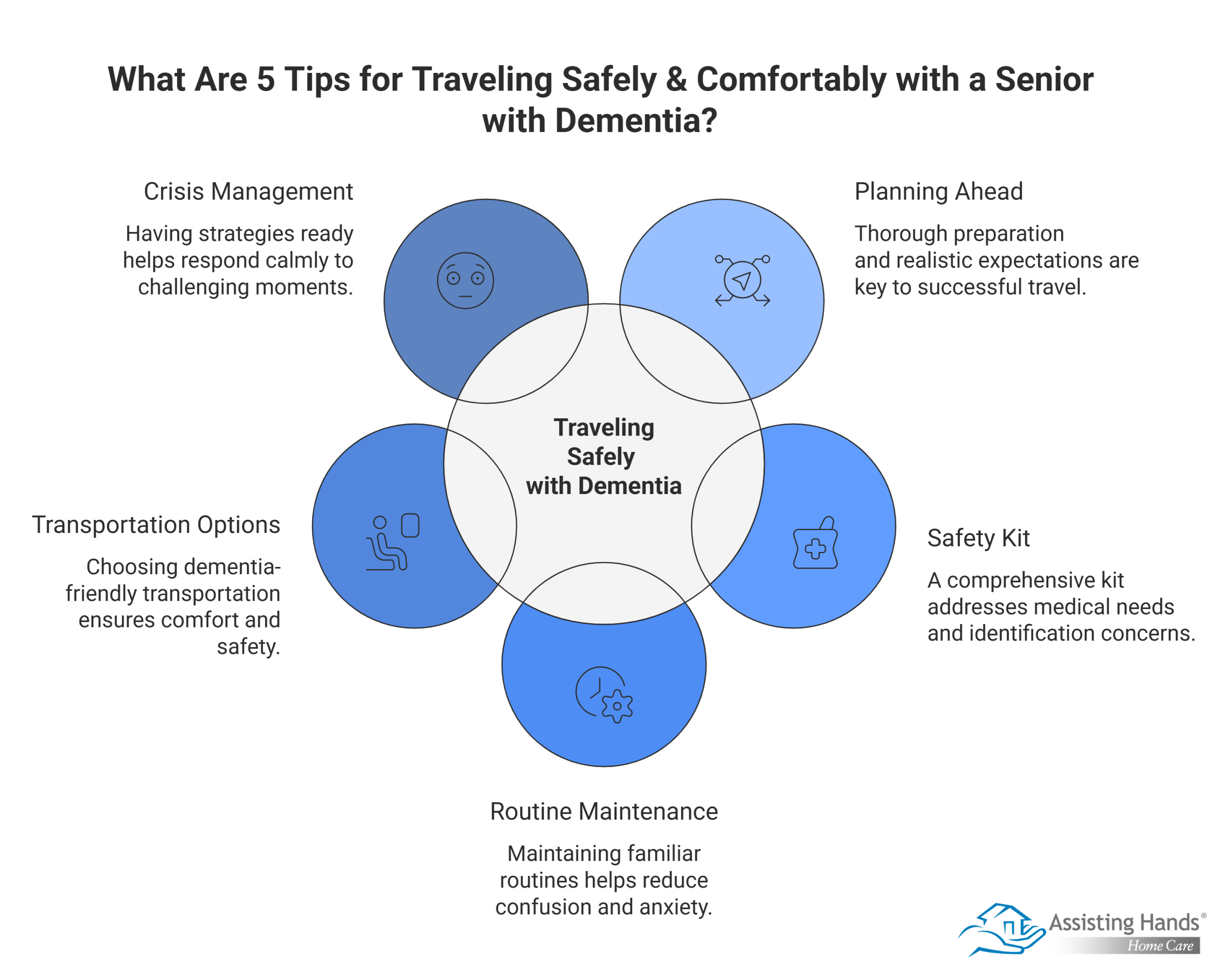
1.Plan Ahead and Keep It Simple
Successful travel with dementia patients starts with thorough preparation and realistic expectations. Choose destinations that are familiar or have personal significance for your loved one, as these locations can provide comfort and reduce anxiety.
Key planning considerations:
- Book direct flights when possible to minimize confusion from layovers.
- Select accommodations close to medical facilities.
- Pack familiar items like favorite blankets or photographs.
- Prepare a detailed itinerary but remain flexible.
- Research dementia-friendly activities at your destination.
Avoid overpacking your schedule. Simple, shorter trips often prove more enjoyable than ambitious multidestination journeys.
Dementia is just one of the many health issues older adults are susceptible to. Seniors can face a variety of challenges as they age, many of which can be mitigated with the help of professional in-home caregivers who provide high-quality home care Westminster. Families trust Assisting Hands Home Care to help their elderly loved ones age in place safely and comfortably.
2.Create a Comprehensive Safety Kit
A well-prepared safety kit serves as your lifeline during unexpected situations. This kit should address both medical needs and identification concerns specific to dementia patients.
Essential safety kit items:
- Current medications with clear labels and dosing instructions
- Medical alert bracelet or GPS tracking device
- Recent photograph and detailed identification card
- Emergency contact list including doctors and family members
- Copies of important documents (insurance cards, medical records)
- Comfort items to reduce agitation
Consider registering with TSA Cares if you are flying, which provides additional assistance for travelers with disabilities and medical conditions.
3.Maintain Familiar Routines and Schedules
Disrupting established routines can increase confusion and anxiety for dementia patients. Structure your travel days around your loved one’s existing schedule as much as possible.
Routine maintenance strategies:
- Keep mealtimes consistent with the home schedule.
- Plan activities during your loved one’s most alert hours.
- Maintain regular bedtime routines.
- Pack familiar snacks and beverages.
- Allow extra time for all activities to reduce stress.
If your loved one takes afternoon naps at home, build this rest period into your travel itinerary. These familiar anchors can help your loved one maintain a sense of security — the same principle that makes dementia care at home so effective in everyday life.
Even when families have the best intentions, caring for aging adults with dementia can be challenging, especially if the condition is caused by Alzheimer’s. Seniors with Alzheimer’s have much to gain when their families opt for professional Alzheimer’s care provided by the experienced team at Assisting Hands Home Care Westminster. Families can rely on compassionate and dedicated caregivers to help their elderly loved ones manage the various challenges of Alzheimer’s disease so they can enjoy a higher quality of life.
4.Choose Dementia-Friendly Transportation Options
Transportation decisions significantly impact the overall travel experience. Each mode of transport presents unique considerations for dementia patients.
Air travel tips:
- Request aisle seats for easier bathroom access.
- Notify airline staff about your loved one’s condition.
- Board early to allow settling time.
- Bring noise-canceling headphones for sensory comfort.
Car travel advantages:
- Complete control over stops and schedule
- Familiar environment with personal belongings
- Ability to play preferred music or audiobooks
- No security restrictions on comfort items
Train travel often provides a good middle ground, offering spacious seating and the ability to move around while maintaining schedule predictability.
5.Prepare for Challenging Moments
Even with careful planning, difficult situations may arise during travel. Having strategies ready helps you respond calmly and effectively.
Crisis management techniques:
- Remain calm and speak in soothing tones.
- Use distraction techniques with favorite topics or activities.
- Have backup plans for major schedule disruptions.
- Know when to cut activities short and return to accommodations.
- Carry contact information for local medical services.
Remember flexibility often matters more than sticking to original plans. If your loved one becomes agitated or confused, prioritizing his or her comfort over sightseeing creates a more positive experience for everyone.
Travel documentation checklist:
- Medical power of attorney documents
- List of current medications and allergies
- Healthcare provider contact information
- Travel insurance information
- Local emergency services numbers
Successful travel with dementia patients requires patience, preparation, and realistic expectations. Focus on creating moments of joy rather than checking items off a tourist list. Small victories—like enjoying a favorite meal together or watching a sunset—often become the most treasured travel memories.
Caring for seniors with dementia can be challenging for family caregivers. Luckily, there is dementia care Westminster families can rely on. Professional dementia caregivers help seniors with dementia stay safe and comfortable at home by preventing wandering, providing cognitive stimulation, and assisting with household chores. If you need professional home care for your loved one, our Care Specialists are just a phone call away. Reach out to Assisting Hands Home Care today.