
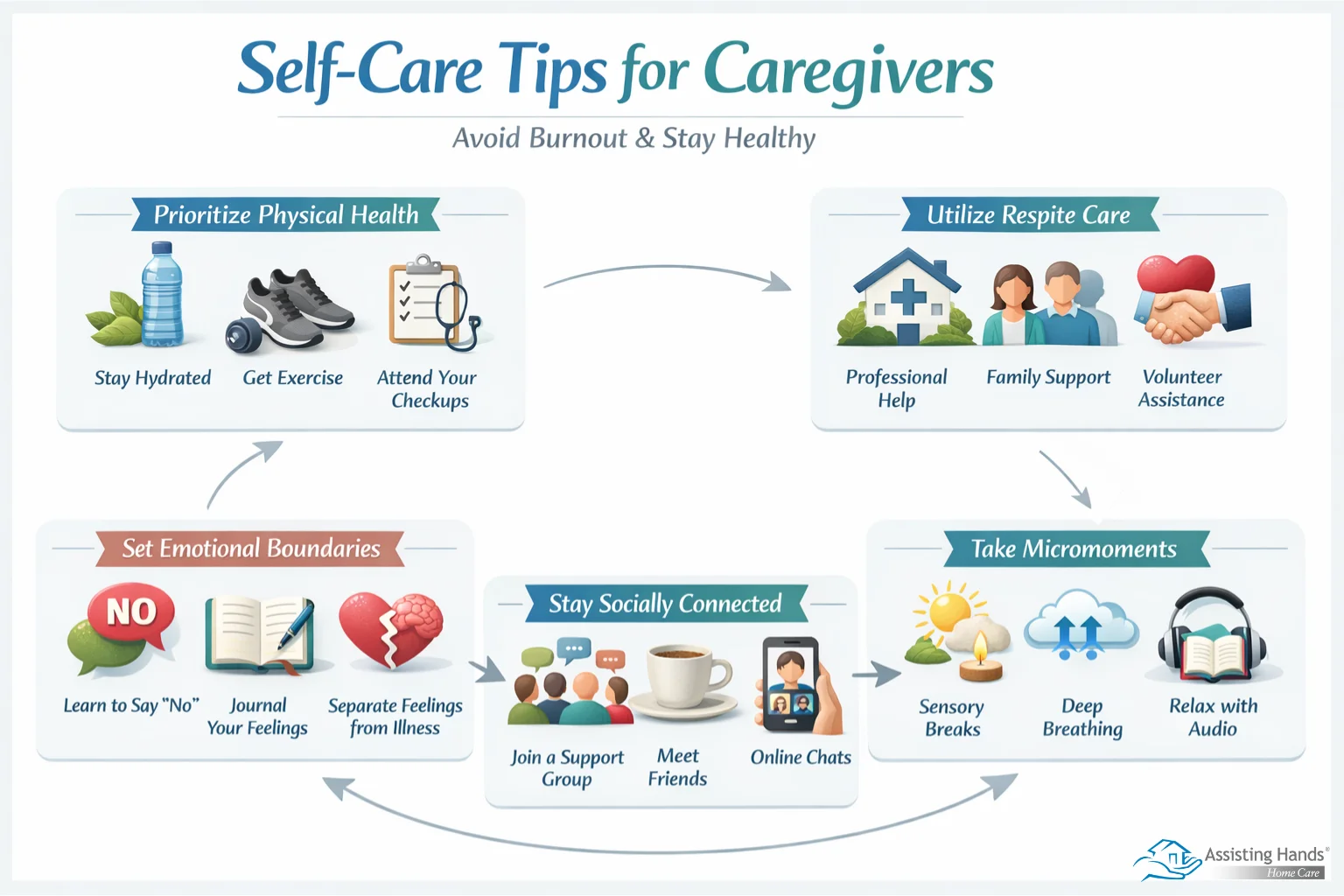
The best self-care practices for caregivers include maintaining physical health, using respite care, setting emotional boundaries, staying socially connected, and incorporating brief moments of daily restoration. These practices can prevent burnout, protect long-term wellbeing, and ensure caregivers can continue providing effective, compassionate support without sacrificing their own health.
Caregiving is often described as a labor of love, but it can quickly deplete your physical and emotional reserves if you don’t prioritize your own wellbeing. Neglecting your needs is a direct path to burnout that ultimately hinders your ability to look after others effectively. Here are essential practices to help you recharge and maintain your health while supporting your loved one.
How Can You Prioritize Your Physical Health while Caregiving?
When you spend your days managing medications, appointments, and daily living tasks for your senior loved one, your own physical health often falls to the bottom of the priority list. However, maintaining your physical baseline is crucial for stamina. You cannot pour from an empty cup, and ignoring your body’s signals can lead to illness or injury.
Start by reclaiming the basics of biological maintenance. It’s common for caregivers to survive on processed snacks or caffeine, but this leads to energy crashes. Focus on high-protein snacks that provide sustained energy, and prioritize sleep hygiene whenever possible.
Try incorporating these simple physical adjustments:
- Hydrate consistently – Keep a large water bottle with you throughout the day to prevent fatigue-inducing dehydration.
- Schedule movement – You don’t need an hour at the gym. A 15-minute walk outside can reset your nervous system and provide a necessary change of scenery.
- Keep up with your own appointments – Don’t cancel your dental cleanings or annual physicals. Your preventative care matters just as much as your loved one’s.
These small but consistent physical habits are a cornerstone of sustainable caregiving — and seeking respite care for family caregivers when needed allows you to maintain them without feeling overwhelmed.
Why Is Utilizing Respite Care Essential for Caregiver Wellbeing?
One of the most dangerous myths in caregiving is the idea that you must do it all alone. Attempting to be the sole source of support 24/7 is unsustainable and dangerous. Respite care isn’t a luxury. It’s a necessary service that provides temporary relief to primary caregivers.
Seeking respite allows you to step away, decompress, and return to your duties with a clearer mind and more patience. It prevents resentment from building up and allows you to maintain your identity outside of being a caregiver. Without adequate rest and relief, caregiver burnout can develop quickly, affecting both your health and the quality of care you provide.
Consider these options for sharing the load:
- Professional services – Hire in-home caregivers for a few hours a week or utilize adult day care centers.
- Family rotation – Ask siblings or other family members to commit to specific shifts rather than offering vague offers of “help.”
- Volunteer organizations – Many local churches and community groups offer companionship programs where volunteers sit with seniors, giving you a few hours of free time.
Family caregivers need to care for their own wellbeing. If you’re caring for an aging loved one and are feeling overwhelmed, consider hiring a professional caregiver to provide respite care Westminster families can trust. To prevent burnout, you can turn to Assisting Hands Home Care. One of our professional caregivers can assist your loved one at home while you take a nap, go to work, run errands, or go on vacation.
How Do Emotional Boundaries Protect Caregivers From Burnout?
Caregiving is emotionally taxing. You may experience grief, frustration, and irritation in response to your loved one’s challenging behaviors. Without boundaries, these emotions can consume you. Emotional boundaries allow you to be compassionate without taking on your loved one’s challenges as your own.
This also involves managing the “guilt trap.” Many caregivers feel guilty whenever they take time for themselves, but this guilt is misplaced. You have a right to a life, hobbies, and happiness separate from your caregiving role.
To protect your emotional health:
- Practice saying “no” – You don’t have to host holiday dinners or volunteer for the PTA while caring for an aging parent. Conserve your energy.
- Journal your frustrations – Expressing negative emotions on paper can stop them from festering internally.
- Separate the disease from the person – If your loved one has dementia or is in pain, he or she may say hurtful things. Remind yourself this is a symptom, not a personal attack.
Even when families have the best intentions, caring for a senior loved one with dementia can be challenging. Fortunately, Assisting Hands Home Care is here to help. We are a leading provider of dementia care Westminster families can trust. You can take advantage of our flexible and customizable care plans, and our caregivers always stay up to date on the latest developments in senior care.
Why Is Social Connection Vital for Caregivers?
Isolation is a silent epidemic among caregivers. Your world can easily shrink until it only contains you and your loved one. This isolation breeds depression and distorts your perspective on reality.
Connecting with others—specifically those who understand the unique pressures you face—validates your experience. It reminds you that you’re not failing—you’re simply navigating a difficult situation.
Ways to stay connected include:
- Join a support group – Whether online or in person, talking to people who “get it” is incredibly therapeutic. You can share tips on navigating insurance or simply vent without judgment.
- Maintain noncaregiving friendships – Schedule coffee with a friend and make a rule to talk about things other than caregiving for at least half the time.
- Digital connection – If you cannot leave the house, schedule video calls with friends or participate in online forums.
How Do “Micromoments” of Self-Care Reduce Daily Stress?
Caregivers often believe self-care requires large blocks of time, but small “micromoments” can be just as effective. You might not have time for a weekend getaway, but you likely have five minutes. Find small pockets of time to calm your nervous system and restore your emotional balance. These small pauses can prevent stress from accumulating to a breaking point.
Look for opportunities to insert these pauses into your routine:
- Sensory breaks – Step outside and feel the sun on your face or light a candle that smells good while you do dishes.
- Deep breathing – Practice the 4-7-8 breathing technique (inhale for 4, hold for 7, exhale for 8) during short pauses in your day.
- Escapism – Listen to an engaging audiobook or podcast while you fold laundry or drive to appointments.
Frequently Asked Questions
How much respite should a caregiver take each week?
Aim for at least 4–8 hours weekly, though individual needs vary based on caregiving intensity and personal health.
Is it selfish to prioritize my own doctor appointments?
No. Maintaining your health ensures you can continue providing high-quality care to your loved one.
What if I feel guilty taking time for myself?
Guilt is common but counterproductive. Self-care prevents burnout and makes you a better, more patient caregiver.
Can online support groups really help with caregiver isolation?
Yes. Virtual connections provide validation, practical advice, and emotional support when in-person meetings aren’t possible.
How do I start setting boundaries when I’ve always said yes?
Start small with one boundary, communicate it clearly, and remind yourself that protecting your wellbeing helps everyone involved.
Seniors can face a variety of age-related challenges. Though some families choose to take on the caregiving duties, there may come a time when they need trusted home care Westminster services for their loved ones living in Westminster. Families sometimes need respite from their duties so they can focus on their other responsibilities, and some seniors need around-the-clock assistance that their families are not able to provide. Assisting Hands Home Care is here to help. To learn more about our premier in-home care plans, call us today.