
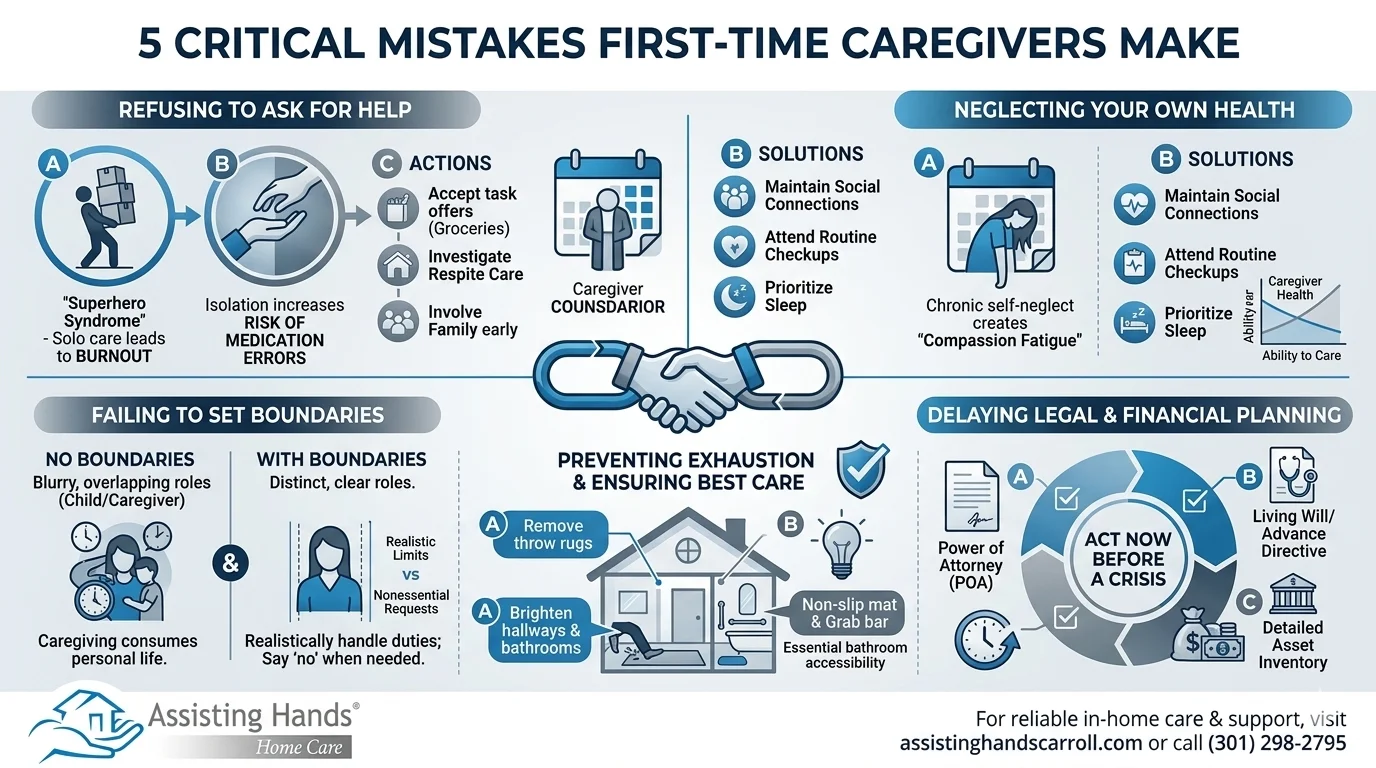
The most common mistakes new caregivers make include refusing to ask for help, neglecting their own health, failing to set boundaries, overlooking home safety hazards, and delaying important legal or financial planning.
Stepping into the role of a caregiver is an act of love, but it also comes with a steep learning curve that can overwhelm even the most organized individuals. While every caregiving journey is unique, many first-time caregivers stumble into the same pitfalls that lead to unnecessary exhaustion and frustration.
Why Is Refusing to Ask for Help a Major Caregiving Mistake?
The most pervasive error new caregivers make is believing they must handle everything alone. However, caregiving is rarely a one-person job, and trying to manage it solo is the fastest route to burnout. This “superhero syndrome” often stems from a sense of duty or guilt, leading you to believe that asking for assistance is a sign of weakness or failure.
Isolating yourself prevents you from providing the best care possible because an exhausted caregiver is more prone to making mistakes with medication or safety. To avoid this, you should:
- Accept offers of help – When friends ask “Is there anything I can do?” have a specific task ready, such as picking up groceries or sitting with your loved one for an hour.
- Investigate respite care – Look into local services that provide temporary relief, allowing you to run errands or rest.
- Involve family members – Hold a family meeting early on to delegate tasks, even if they’re small administrative duties like managing bill payments.
Whether you need respite from your caregiving duties or your aging loved one needs 24-hour home care in Westminster, Assisting Hands Home Care can meet your family’s care needs. Our dedicated caregivers are available around the clock to provide transportation to doctor’s appointments, ensure seniors take their prescribed medications, and help with a variety of tasks in and outside the home.
How Does Neglecting Your Own Health Impact Caregiving?
It’s easy to put your own needs on the back burner when you’re focused on the health of someone else. Unfortunately, chronic self-neglect often leads to “compassion fatigue,” where you become too physically and emotionally depleted to care about anything, including your loved one.
New caregivers often skip their own doctor’s appointments, stop exercising, or rely on fast food for convenience. Remember your health is the foundation of your ability to care for your loved one. You must prioritize:
- Sleep hygiene – Try to maintain a regular sleep schedule, even if it requires coordinating overnight help.
- Routine checkups – Don’t cancel your own medical or dental appointments.
- Social connection – Maintain contact with friends and hobbies outside of caregiving duties to preserve your sense of identity.
Family caregivers need to care for their own wellbeing. If you’re caring for an aging loved one and are feeling overwhelmed, consider hiring a professional caregiver to provide hourly, live-in, or overnight home care Westminster families can trust. To prevent burnout, you can turn to Assisting Hands Home Care. One of our professional caregivers can assist your loved one at home while you take a nap, go to work, or run errands.
Why Is Setting Boundaries Important for Caregivers?
When you’re caring for a family member, the lines between your role as a loved one (spouse, child, or sibling) and your role as a caregiver can easily blur. Without clear boundaries, the demands of caregiving can consume every waking moment, leaving no space for your personal life or other relationships.
This often manifests as an inability to say “no” to nonessential requests or tolerating difficult behavior because you feel sorry for your loved one. It’s vital to recognize what you can realistically handle and communicate those limits clearly. If your loved one’s demands become unreasonable or abusive, professional intervention or therapy may be necessary to reestablish a healthy dynamic. Without these boundaries in place, caregiver burnout becomes increasingly likely, making it harder to sustain quality care over time.
What Home Safety Hazards Do New Caregivers Often Overlook?
New caregivers often focus intensely on medical needs—like pills and appointments—while overlooking the physical environment. A home that was safe for an independent adult can be a minefield for someone with mobility issues or cognitive decline. Ignoring these environmental hazards can lead to preventable falls and emergency room visits.
Conduct a safety audit of the home immediately. Common oversight areas include:
- Throw rugs – These are major tripping hazards and should be removed or secured.
- Lighting – Dim hallways and bathrooms need nightlights or brighter bulbs.
- Bathroom accessibility – Grab bars and nonslip mats are essential in showers and near toilets.
Why Should Legal and Financial Planning Happen Early?
Waiting until a crisis occurs to handle legal paperwork is a mistake that can have devastating consequences. Without the proper legal authority, you may find yourself unable to access bank accounts to pay for care or locked out of medical decision-making processes during an emergency. New caregivers often feel uncomfortable discussing finances or end-of-life wishes, fearing it will upset their loved ones.
You should prioritize gathering and updating these documents as soon as possible:
- Power of attorney (POA) – Designate who can make financial and medical decisions if your loved one becomes incapacitated.
- Living will/advance directive – Clearly outline your loved one’s wishes regarding life-sustaining treatments.
- Asset inventory – Make a list of all bank accounts, insurance policies, and debts to prevent financial disarray later.
Family caregivers who need help caring for their senior loved ones should consider professional in-home care. The type of Home Care Westminster seniors need can vary. Some need assistance a few hours a day, while others require more extensive around-the-clock assistance. At Assisting Hands Home Care, we tailor our care plans based on each senior’s individual care needs, and the plans can be adjusted at any time. We are a trusted provider of respite and 24-hour care, and we also offer specialized Alzheimer’s, dementia, Parkinson’s, and stroke care for seniors. Assisting Hands Home Care can be your trusted partner in caregiving for your loved one. Contact one of our experienced Care Specialists today to learn more about our reliable in-home care services.
Frequently Asked Questions
Is respite home care customizable?
+
Yes, respite care plans are tailored to meet the specific needs of individuals and their families.
How long can respite home care services last?
+
Respite care can be scheduled for a few hours, a full day, or even several weeks, depending on the caregiver’s needs.
What types of services are included in respite home care?
+
Services may include personal care, meal preparation, medication reminders, companionship, and light housekeeping.
Who can benefit from respite home care services?
+
Family caregivers who need time to rest, run errands, or focus on personal responsibilities can benefit from respite home care.
What is respite home care?
+
Respite home care provides temporary relief for family caregivers by offering professional care for their loved ones in the comfort of their homes.